
Sanya Travel Guide: Beaches, Islands, and the Real Taste of Hainan
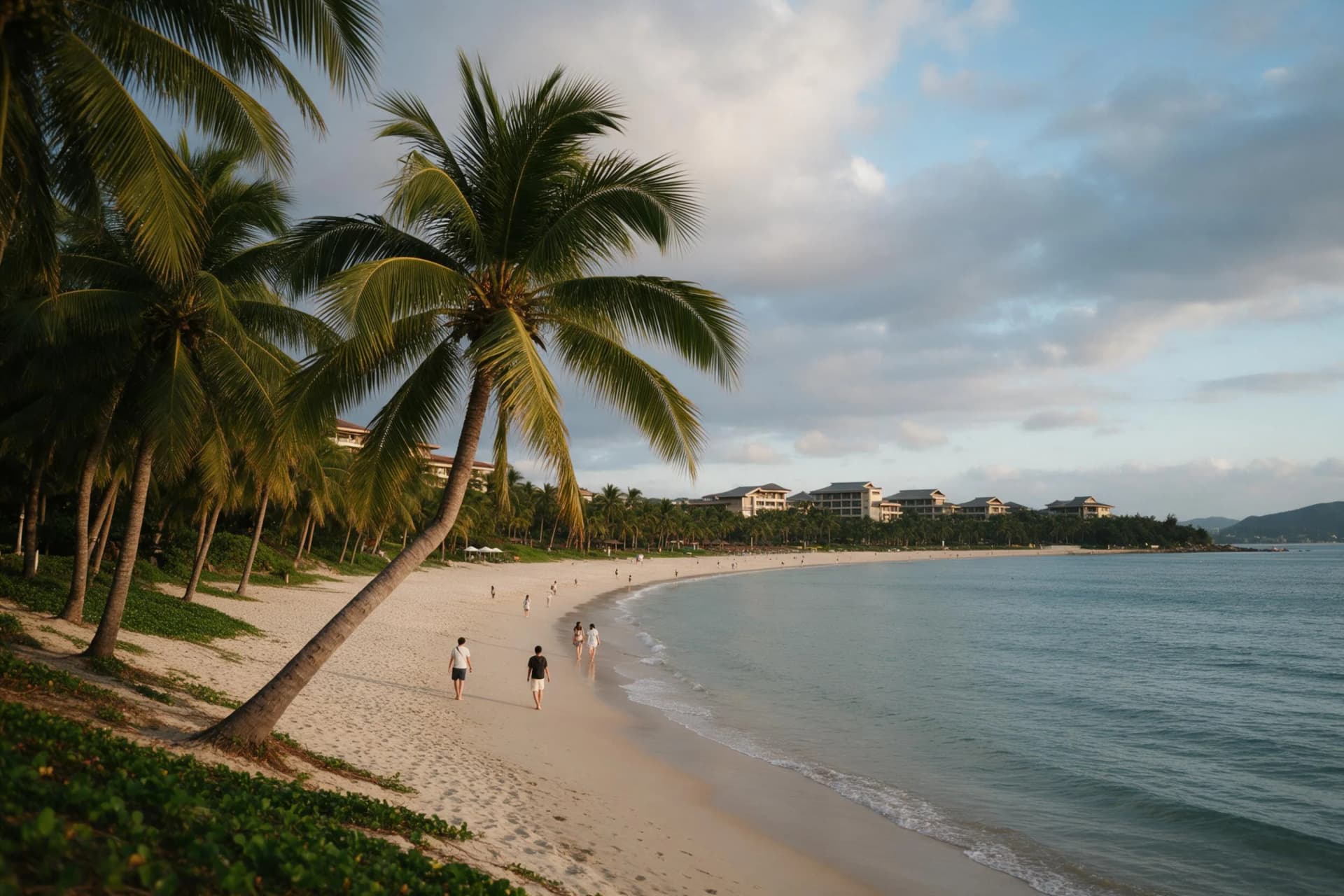
Sanya is China's southernmost city and its most dependable tropical escape: warm water almost year-round, sheltered bays for swimming, a ferry-ride island with real coral, Buddhist monuments, and a seafood-and-coconut cuisine that costs far less than the resort skyline suggests.
The plane banks left over a green ridgeline, and suddenly there it is: a curve of pale sand, water shifting from jade to deep blue, and coconut palms leaning into the wind. Sanya is the southernmost city on Hainan Island, routinely called China's Hawaii, and the nickname has been earned. What makes this tropical corner of the country worth the flight is not only the beaches, though. It is the easy rhythm of a place where the sea sets the schedule and nobody argues with it.
Sanya sits at roughly the same latitude as Hawaii, which explains the year-round warmth. Daytime highs usually land in the high 20s to low 30s Celsius, and even January, peak season for Chinese travelers escaping the northern winter, is warm enough for swimming. The main caveat is typhoon season, roughly June through October, when afternoon squalls and the occasional storm can reset your plans. November to April brings the most reliable sunshine along with the highest hotel rates; May and September are quieter and often better value.
Yalong Bay, about 25 kilometers southeast of downtown, is where Sanya looks its most postcard-perfect. The sand is fine and pale, the bay is sheltered, and the water stays swimmable well into the evening. Most of the international luxury resorts line this stretch, which means calm mornings, well-kept beach chairs, and sunsets that pull people off their loungers. Sanya Bay, closer to the airport and the city, is longer and livelier, a good choice if you would rather walk to dinner than take a taxi. Dadonghai, tucked between the hills, is the backpacker-friendly middle ground with the best concentration of inexpensive restaurants.
For the clearest water, take the ferry to Wuzhizhou Island, a short crossing from Haitang Bay. The island is one of China's best spots for snorkeling and introductory dives, with coral, reef fish, and visibility that can reach 20 meters on a calm day. Go early, because tour groups arrive mid-morning and the pier queues grow fast. If you would rather stay dry, the cable car up to Luhuitou Park delivers the classic panorama of the city wrapped around its two bays, plus the legend of the young deer hunter that gave the park its name.
Sanya is not only resorts. Nanshan Temple, about 40 minutes west of the city, is a working Buddhist complex set among landscaped gardens and home to a 108-meter statue of the Bodhisattva Guanyin standing on her own artificial island in the sea. It is genuinely impressive even for travelers with no religious interest. Inland, the Binglanggu Li and Miao Cultural Heritage Park introduces the island's Indigenous communities. The Li people have lived on Hainan for thousands of years, and their weaving, tattoo traditions, and bamboo dance are presented with more care than the average theme park manages.
Eating well in Sanya is easy and affordable. The city's signature dish is Wenchang coconut chicken, poached in fresh coconut water and then dipped in a sauce of soy, garlic, and tiny Hainan limes. Hainan rice noodles, served either in a clear broth or dry with a thick savory sauce, make a perfect breakfast. For seafood, head to the First Market downtown: choose your fish, prawns, or crab from the tanks, then carry it to a nearby cookshop that will steam or stir-fry it for a small fee. Finish with qingbuliang, a bowl of coconut milk, beans, and fruit that exists purely to defeat the heat.
A few practical notes. Sanya Phoenix International Airport is 15 to 40 minutes from the main beach areas depending on traffic. Taxis and ride-hailing are cheap and easy, but drivers rarely speak English, so keep your hotel address saved in Chinese characters. Hainan is a visa-free entry region for citizens of many countries for stays of up to 30 days, though the rules change, so confirm before booking. Pack reef-safe sunscreen, and treat the midday sun here as a warning rather than a suggestion.
So pack light, book a room with a balcony facing the water, and give yourself at least four nights: three for the beach and the island, one for the temples, the markets, and the food. Sanya rewards travelers who slow down instead of ticking off sights. Start planning your Hainan escape with ChinaMira, and we will help you shape an itinerary around your dates, your budget, and your appetite.
Good to know
- Best months
- November to March is the dry season, with 24-28°C days, under 25 mm of rain in most months and sea temperatures of 23-25°C from December to February. Avoid September (about 255 mm of rain and peak typhoon risk), National Day week (October 1-7) and Chinese New Year (February 15-23 in 2026).
- Getting there
- Fly into Sanya Phoenix International Airport (SYX), 11 km northwest of downtown: a taxi takes about 20 minutes and costs around USD 4.2, while the airport shuttle is USD 1.4-2.1 to Dadonghai in about 40 minutes. Yalong Bay is 25 km southeast (about USD 9.9 by taxi) and Haitang Bay is 28 km northeast.
- Wuzhizhou Island day
- The adult ticket including the round-trip ferry is USD 20, reduced to USD 19 from May 1 to September 30; children under 1.2 m are free and students pay USD 9.6 from June 10 to September 11. The boat crossing takes about 15 minutes, last island entry is 4:00 p.m., and daily numbers are capped at roughly 15,000 visitors.
- Nanshan Culture Tourism Zone
- About 40 km southwest of downtown Sanya, the zone holds the 108-meter copper statue of Guanyin standing on her own island in the sea. Entry is USD 18 from October 1 to April 30 and USD 15 from May 1 to September 30, and the vegetarian restaurant inside the grounds suits non-spicy diets.
- Entry rules (Hainan visa-free)
- Hainan's 30-day visa-free entry has covered ordinary passport holders from 61 countries since August 20, 2026, under a policy that began on February 9, 2024. Enter through an approved port such as Sanya Phoenix, stay within Hainan Province, and no advance declaration is needed; work and study are excluded.
- Food and daily budget
- Coconut chicken hotpot costs USD 13-25 per person, a seafood-market cookshop charges about USD 0.7-2.1 per jin to prepare your catch, Hainan rice noodles are USD 1.7-2.8 a bowl and qingbuliang is USD 1.7-3.5. Budget USD 14-28 a day for local eating.
Frequently asked questions
When is the best time to visit Sanya, and when should I avoid it?
November to March brings the dry, sunny window: 24-28°C days, under 25 mm of rain in most months and sea temperatures of 23-25°C in December-February. Aim for late November or March, when beachfront rooms cost far less than the Chinese New Year peak (February 15-23 in 2026), and avoid September, the wettest month at about 255 mm of rain.
How do I get from Sanya Phoenix Airport to Yalong Bay or Dadonghai?
Sanya Phoenix International Airport (SYX) sits 11 km northwest of downtown. A taxi into the city takes about 20 minutes and costs around USD 4.2, while the airport shuttle is USD 1.4-2.1 and reaches Dadonghai in about 40 minutes. Yalong Bay is 25 km southeast of downtown, a taxi ride of roughly USD 9.9, and Haitang Bay is 28 km northeast.
How much does Wuzhizhou Island cost, and how long is the boat?
The adult ticket including the round-trip ferry is USD 20, dropping to USD 19 from May 1 to September 30; children under 1.2 m enter free and students pay USD 9.6 from June 10 to September 11. The crossing takes about 15 minutes, last island entry is 4:00 p.m., and the island caps visitors at roughly 15,000 a day, so book by real name 1-7 days ahead.
Can US citizens visit Sanya without a visa?
Yes, for stays of up to 30 days. Hainan's own visa-free entry, which began on February 9, 2024, covers ordinary passport holders from 61 countries including the United States as of August 20, 2026. You must fly into an approved port such as Sanya Phoenix and remain inside Hainan Province; work and study are excluded.
What should I eat in Sanya, and what does it cost?
Start with Wenchang coconut chicken hotpot at USD 13-25 per person, then try the buy-and-cook seafood system at the First Market, where a neighboring cookshop charges about USD 0.7-2.1 per jin to steam or stir-fry your catch. Hainan rice noodles are USD 1.7-2.8 a bowl and qingbuliang, the cold coconut dessert, costs USD 1.7-3.5.
Keep exploring
Plan with ChinaMira
Turn this into a trip
Use this guide as a starting point — we can handle the route, guides, trains and the visa invitation letter.