
Story
Who Qualifies for China's 240-Hour Visa-Free Transit in 2026? Food Guide
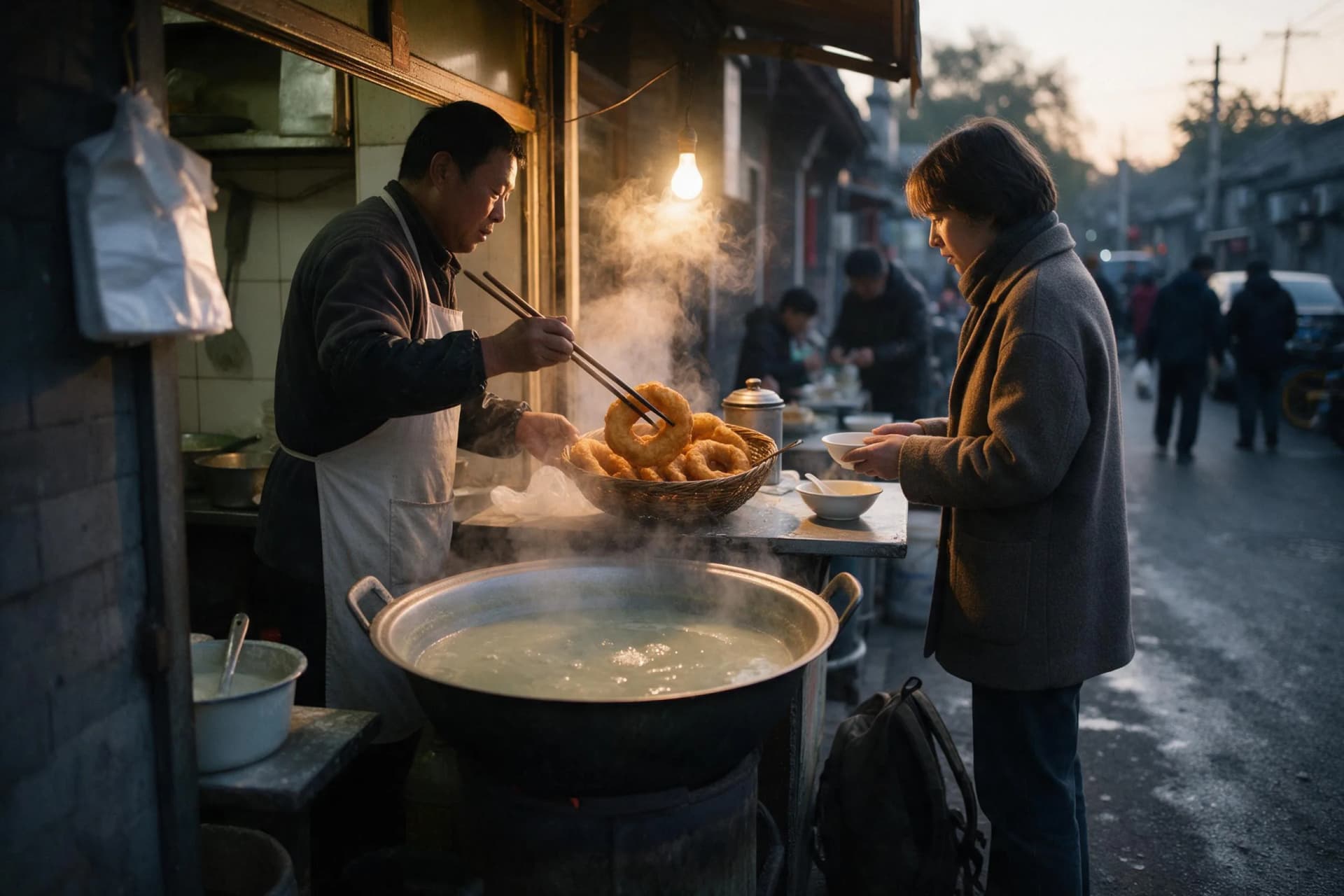
A free 10-day permit turns a Beijing layover into a real eating trip: crackling roast duck, copper-pot mutton, cold-weather noodles and a fermented mung-bean breakfast on Huguosi Street. This guide answers who qualifies for the 240-hour transit rule, prices five signature dishes for 2026, names the street to eat them on, and points vegetarians and halal diners to tables that welcome them.
In 2026, travelers from 57 countries, including the United States, can enter China visa-free for 240 hours — 10 days — by arriving at one of 65 open ports with a confirmed onward ticket to a third country; the permit costs nothing, and the food is the reason to linger.
I watched it happen on a gray Tuesday last October at Beijing Capital International Airport. A schoolteacher from Denver, three days into a Los Angeles–Beijing–Seoul routing, cleared the transit counter in under 20 minutes, then asked the only question that mattered: where do I eat first? We rode into the city and started with dumplings in a Dongcheng hutong, steam fogging the window. The August 20, 2026 update that added Kyrgyzstan and Vietnam to the eligible list made headlines, but the quiet truth is simpler: the permit is a free sticker in your passport, and it turns a long layover into a full food trip.
The rule that trips people up is the third country or region. Los Angeles to Beijing to Bangkok qualifies; Los Angeles to Beijing to Los Angeles does not. Hong Kong, Macau and Taiwan count as separate regions, so London to Shanghai to Hong Kong works. You need an ordinary passport valid for at least three months and an onward ticket with a confirmed date and seat; an itinerary on your phone is accepted. There is no age limit. One detail worth knowing: the window starts at 00:00 on the day after you arrive, not at the moment you clear the counter, and it cannot be extended once you are inside China. Work, study and news reporting still require a visa arranged in advance.
Beijing is the easiest place to eat well inside the permitted area, which for a Beijing entry covers Beijing, Tianjin and Hebei. Two dishes anchor the trip. Peking duck is the ceremony: lacquered skin carved at the table, wrapped in thin pancakes with scallion and sweet bean sauce, and 2026 prices run about 228–398 yuan for a whole bird, or roughly 150–200 yuan per person at a casual house such as Siji Minfu near the Forbidden City. Instant-boiled mutton is the other essential — paper-thin lamb swirled through a copper pot of clear broth at Jubaoyuan on Niujie, about 90–160 yuan per person once you add vegetables, sesame sauce and a drink.
Three more plates fill the days between: • Zhajiangmian — thick wheat noodles under a dark fermented-bean-and-pork sauce, 18–38 yuan a bowl. • Baodu — quick-boiled tripe dressed with sesame paste and chili oil, 30–50 yuan a plate, best at an old snack shop. • Douzhi with jiaoquan — the acquired-taste breakfast of fermented mung-bean milk and a crisp fried dough ring, 8–20 yuan a set. Order the douzhi first and watch a local doctor it with pickles; it is sour, fizzy and unforgettable, and it costs less than a cappuccino at home.
The one street to put on your map is Huguosi Street in Xicheng, a short walk from Ping'anli station. Huguosi Restaurant at No. 93 has been the neighborhood's breakfast counter for decades: doors open at 05:30 and close at 21:00, and the tab lands near 30 yuan a person. Come before eight to eat with commuters and retirees, order douzhi, jiaoquan, aiwowo (steamed rice cakes) and lüdagun (sweet bean-flour rolls), and pay with the QR code on the wall. Niujie, ten minutes south, is the older snack street and stays busy from breakfast until the lamps come on.
Vegetarian and halal eaters are well served. Gongdelin, a century-old vegetarian kitchen on Qianmen East Street, recreates Beijing classics without meat — vegetarian roast duck, "squirrel" fish and braised "pork" made from wheat gluten and mushrooms — and a table for two usually lands between 100 and 200 yuan. For halal food, Niujie is the city's Hui Muslim heart: Jubaoyuan's copper-pot mutton is the headline, while the bakeries and snack counters along the street sell beef pies, lamb skewers and sweet rice cakes all day. Both neighborhoods sit on the metro, and neither expects a tip; mobile payment through Alipay or WeChat Pay, linked to a foreign card, works almost everywhere.
Plan the window loosely. Beijing rewards three or four days of eating and walking, and the permitted area lets you add a Tianjin or Hebei day without leaving the policy. Keep your exit flight inside the window and carry a screenshot of the ticket. September to November and April to May bring the best market weather; summer is hot and humid, winter is dry and bright with the best duck appetite. Budget 150–300 yuan a day for food if you mix street breakfasts with one sit-down meal.
Send ChinaMira your passport country, arrival airport and travel dates, and we will confirm whether the 240-hour door is open for you — then build the trains, tea houses and breakfast streets around it. Tell us if you eat vegetarian or halal, and we will book the right table before you land.
Good to know
- Who qualifies (2026)
- 57 countries as of August 20, 2026, when NIA Announcement No. 4 of 2026 added Kyrgyzstan and Vietnam; the list includes the US, UK, Canada, Australia, Japan and South Korea, across 24 provincial-level regions.
- Stay length and clock
- Up to 240 hours (10 days) and non-extendable; the window starts at 00:00 on the day after arrival. No age limit and no advance embassy application required.
- Cost and documents
- $0 permit issued at the transit counter; passport valid for at least 3 months plus a confirmed onward ticket to a third country or region with a date and seat.
- Ports and permitted area
- 65 open ports; entering through Beijing Capital or Beijing Daxing unlocks Beijing, Tianjin and Hebei, the area that applies to this food guide.
- Five signature dishes (2026 prices)
- Peking duck CNY 228–398 a bird (CNY 150–200 per person casual); instant-boiled mutton CNY 90–160 per person; zhajiangmian CNY 18–38 a bowl; baodu CNY 30–50 a plate; douzhi with jiaoquan CNY 8–20 a set.
- Breakfast street, vegetarian and halal
- Huguosi Street, Xicheng: Huguosi Restaurant at No. 93, open 05:30–21:00, about CNY 30 per person. Vegetarian: Gongdelin, Qianmen East Street. Halal: Niujie, home of Jubaoyuan.
Frequently asked questions
Do US citizens qualify for China's 240-hour visa-free transit in 2026?
Yes. The United States is on the eligible list, so a US passport holder flying Los Angeles to Beijing to Bangkok can enter without a visa. The hard conditions are a valid passport and a confirmed onward ticket to a third country or region; there is no age limit and no advance application.
When does the 240-hour visa-free clock start, and can I extend it?
Officially the window is counted from the day after arrival, so a morning landing effectively gives you part of that first day as a bonus. It cannot be extended inside China; overstaying can bring a fine of 500 yuan (about $70) per day, capped at 10,000 yuan.
What should I eat on a 240-hour layover in Beijing?
Start with breakfast on Huguosi Street in Xicheng, then work through roast duck, copper-pot mutton, zhajiangmian, baodu and douzhi with jiaoquan. Niujie, ten minutes south, covers halal snacks all day, and Gongdelin near Qianmen is the vegetarian classic. Keep one sit-down meal a day and graze the rest.
Are there vegetarian and halal restaurants for transit travelers in Beijing?
Yes. Gongdelin on Qianmen East Street has served vegetarian versions of Beijing classics for about a century, and the Niujie quarter in Xicheng is the city's halal heart, with Jubaoyuan famous for instant-boiled mutton. Both are on metro lines and both take Alipay or WeChat Pay linked to a foreign card.
Can I leave Beijing during the 240-hour visa-free stay?
Yes, but only inside the permitted area tied to your entry port. A Beijing entry covers Beijing, Tianjin and Hebei, so a day trip to Tianjin is fine. Cross-province travel beyond those listed areas counts as illegal residence, and work, study and news reporting are not allowed under the permit.