
Attraction
The Bund, Shanghai: A Riverfront Where Empires Left Their Facades
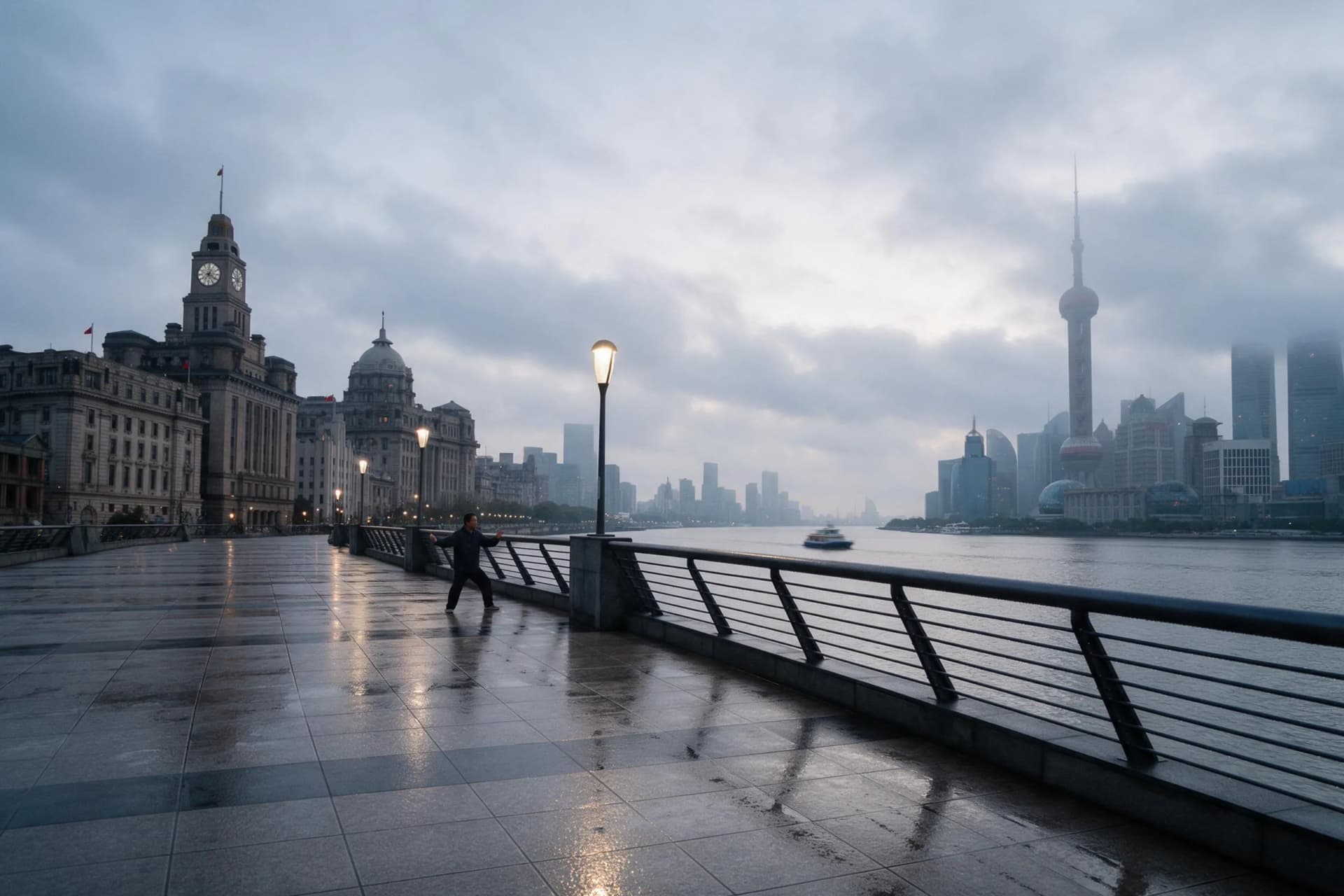
The Bund is Shanghai's 1.5-kilometer riverfront promenade, where 52 historic banking facades face Pudong's futuristic skyline across the Huangpu River. It is free, open around the clock, and most rewarding at sunrise or after dark.
At six in the morning, the Bund belongs to Shanghai rather than to tourists. Old men steer wooden diabolos through the air beside the railing, a tai chi class moves in slow unison, and the Huangpu River slides past in the color of wet slate. Facing the water, Lujiazui's glass towers stand silvered by haze. Behind you are the stone banks, clubs, and trading houses that made this city a byword for ambition a century ago. Standing between those two Shanghais is the whole reason the Bund rewards an early alarm clock.
The Bund—Waitan in Mandarin, roughly "the outer beach"—is a 1.5-kilometer promenade on the west bank of the Huangpu River, in old Puxi, running from Waibaidu Bridge in the north to the Yan'an East Road signal tower in the south. It costs nothing, never closes, and is permanently crowded at night. The name once described a mudflat outside the walled city; today it is the seam where Shanghai's nineteenth-century trading past meets its twenty-first-century skyline.
The story starts with an unpromising towpath. After the Treaty of Nanking opened Shanghai to foreign trade in 1843, British, American, and later French merchants claimed the riverbank as a concession. Wharves, godowns, and counting houses went up first. In the 1920s and 1930s, as Shanghai became Asia's financial capital, those modest buildings were demolished and replaced with the monumental banks and hotels you see now. The Bund was bombed in 1937, then frozen for decades under a planned economy, before being restored and polished in the 1990s and again for the 2010 World Expo.
The result is often called a museum of world architecture: 52 buildings packed into a single stretch, in styles running from neoclassical to Art Deco. Highlights include the former HSBC Building (1923), with its domed banking hall and mosaic ceiling, now occupied by the Shanghai Pudong Development Bank; the Custom House (1927), whose clock tower still chimes across the river; the Art Deco Fairmont Peace Hotel, once the glittering playground of the Sassoon family; and the Bank of China Building (1937), designed by Chinese architect Lu Qianshou and famously shortened so it would not overshadow its foreign neighbor.
Look for the smaller details. At the north end, the Waibaidu Bridge, a steel truss completed in 1908, was the first all-steel bridge in China. Near the middle of the promenade stands a bronze Chen Yi, the city's first Communist mayor, greeting the river with quiet confidence. A short walk south, the Bund Bull answers Wall Street's Charging Bull, though Shanghai's version arrived in 2010 with a swagger all its own.
Across the water, Pudong's Lujiazui peninsula supplies the postcard: the 468-meter Oriental Pearl Tower strung with spheres, the tiered Jin Mao Tower, the bottle-opener silhouette of the Shanghai World Financial Center, and the 632-meter Shanghai Tower, the tallest building in China. In the evening the historic facades behind you are floodlit in warm gold, while the skyline ahead performs a slow color show that changes with the weather and the hour.
Plan your visit around light and crowds. Come at sunrise for open space and soft reflections, or on a clear evening for the skyline at its most theatrical. The promenade is busiest from about 7 to 10 p.m. and on weekend nights; if you want the classic photograph without the elbows, take a Huangpu River cruise or cross to Pudong and shoot back at the historic facades instead. To get there, ride Metro Line 2 or 10 to East Nanjing Road, or Line 10 to Yuyuan Garden; the walk from Nanjing Road's pedestrian street takes about ten minutes. Pair the Bund with the riverside Rockbund lanes, Yuyuan Garden, or the Bund Sightseeing Tunnel, a gloriously kitschy ride beneath the river.
Give the Bund two visits, not one: a daylight walk to read the architecture slowly, and a return after dark to watch the city light itself. Wear comfortable shoes, carry water in the sticky summer months, and let yourself linger at the railing while the ferries cross. Whether you come for the history, the photographs, or simply the view, this riverfront delivers the clearest introduction to Shanghai you will find anywhere. Make it your first evening here and your last, and you will understand this city faster than any museum could teach you.
Good to know
- Entry and opening hours
- Free. The 1.5 km promenade runs from Waibaidu Bridge in the north to the East Yan'an Road signal tower in the south and never closes, with no ticket gate. Waibaidu Bridge, completed in 1908 as China's first all-steel bridge, and the Bund Bull, installed in 2010, both sit along the walk.
- Time needed
- Allow 45-60 minutes for the full 1.5 km riverside walk, or 2-3 hours to read the architecture, detour into the Rockbund lanes and cross to Pudong. Sunrise gives the emptiest promenade; the floodlighting on both banks usually stays on until about 10-11 p.m.
- Getting there
- Metro Line 2 or 10 to East Nanjing Road, then about a 10-minute walk east to the river; Line 10 to Yuyuan Garden leaves an 8-10 minute walk south. The public Huangpu ferry from Jinling East Road costs CNY 2 and crosses to Dongchang Road in roughly 5-10 minutes.
- Tickets and add-ons to budget for
- The Bund Sightseeing Tunnel under the river is CNY 50 one way or CNY 70 return, 646.7 m and 3-5 minutes, open 09:30-22:30 (15 April-30 November) and 09:30-21:30 (1 December-14 April). A 50-minute Huangpu River sightseeing cruise from Shiliupu Wharf is around CNY 150 and sails 11:00-21:30.
- Architecture to look for
- 52 historic buildings line the west bank: the former HSBC Building with its domed banking hall (1923), the Custom House clock tower (1927), the Art Deco Fairmont Peace Hotel, and the Bank of China Building (1937), designed by Chinese architect Lu Qianshou.
- Visa and entry
- China's 240-hour (10-day) visa-free transit covers 55 nationalities arriving in Shanghai with a confirmed onward ticket to a third country or region and at least 3 months' passport validity. Other travellers need a tourist (L) visa, so confirm current rules with China's National Immigration Administration before booking.
Frequently asked questions
Is the Bund free to visit, and what are its opening hours?
Yes. The 1.5-kilometre Bund promenade is completely free and open 24 hours a day, every day of the year. There are no tickets, gates or closing time, so you can walk on at 6 a.m. for tai chi and empty railings or at midnight after the skyline lights have dimmed.
When is the best time to visit the Bund?
Come at sunrise, roughly 5:30-6:30 a.m. in summer, for soft light and space at the railing, or after dark when the historic facades are floodlit and Pudong performs its colour show. Crowds peak from about 7 to 10 p.m., especially Friday to Sunday, so a weekday evening is noticeably calmer.
How do I get to the Bund by metro?
Take Metro Line 2 or Line 10 to East Nanjing Road station, then walk about 10 minutes east along Nanjing Road to the river. Metro Line 10 also stops at Yuyuan Garden, an 8-10 minute walk south of the Bund promenade. Fares are distance-based and cheap, and Alipay or WeChat Pay works at the gates.
How much is the Bund Sightseeing Tunnel, and is it worth it?
The illuminated cable-car ride under the Huangpu River is 646.7 metres and takes 3-5 minutes, costing CNY 50 one way or CNY 70 return. It opened in October 2001 and runs 09:30-22:30 from 15 April to 30 November and 09:30-21:30 from 1 December to 14 April. Treat it as kitsch family fun, not transport.
Do I need a visa to visit Shanghai and the Bund?
Many travellers do not. China's 240-hour (10-day) visa-free transit covers citizens of 55 countries who arrive in Shanghai with a confirmed onward ticket to a third country or region and at least 3 months' passport validity remaining. Everyone else needs a tourist (L) visa, so check your eligibility with China's National Immigration Administration before booking flights.