
Story
China Arrival Card and Health Declaration: What You Fill In (2026)
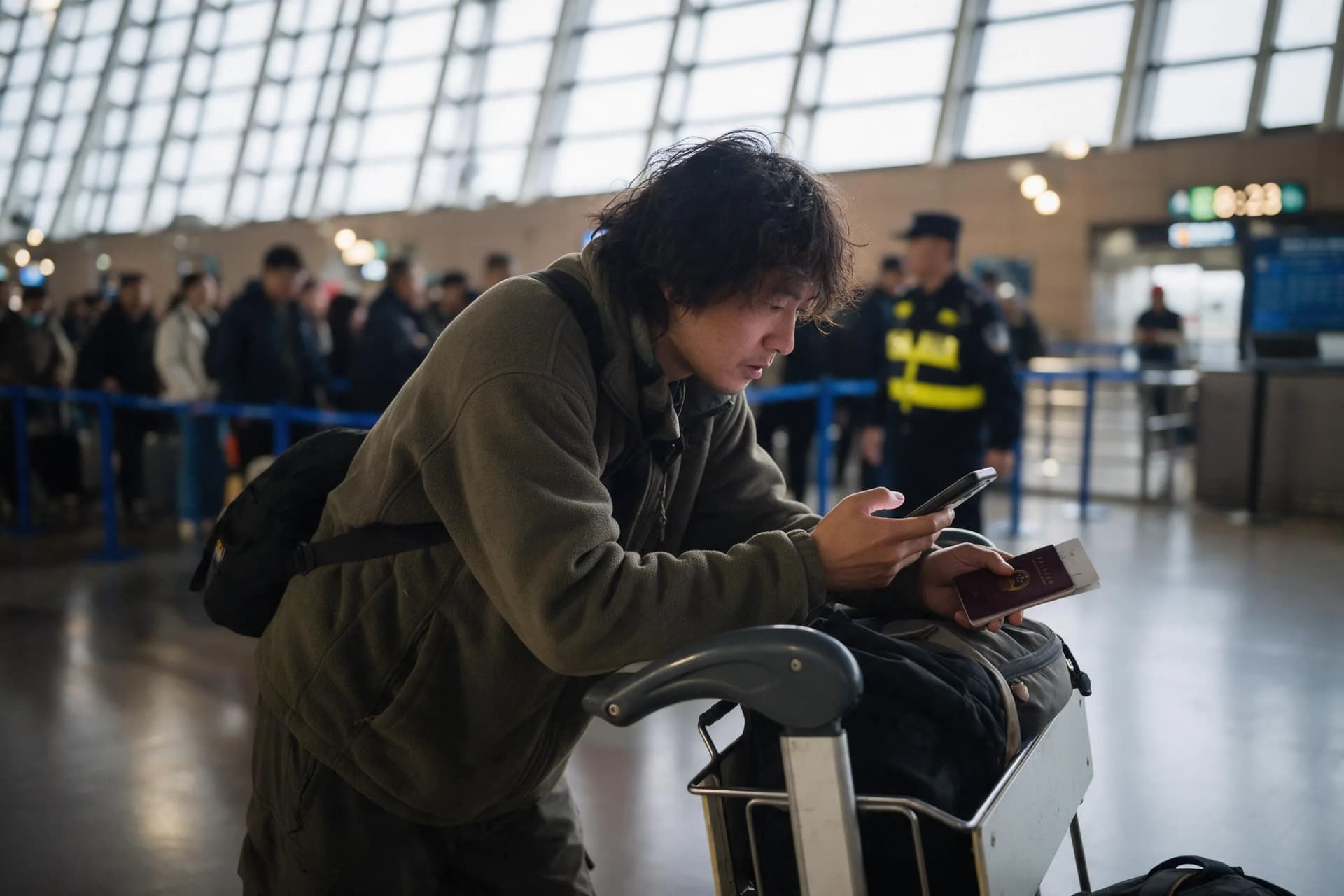
In 2026, most foreign visitors to China fill a free arrival card - online within 72 hours of landing since November 20, 2025, or on paper at the airport. The general health declaration was waived on November 1, 2023 and is required only if you have symptoms. A customs goods form is needed only for cash above US$5,000, alcohol over 1,500 ml or resident items over 5,000 yuan.
In 2026, most foreign visitors to China fill one arrival card - online since November 20, 2025, up to 72 hours before landing, or on paper at the airport - and a health declaration only if they have symptoms. Both are free.
Last spring I sat in row 34 of a wide-body from Doha as the cabin crew walked the aisle with a stack of paper arrival cards. The woman beside me, a teacher from Ohio on her first trip to Asia, had already finished hers on her phone before takeoff. She pulled up the NIA confirmation screen, a plain page with no stamp and no QR-code drama, and slid the phone back into her seat pocket. At Shanghai Pudong she joined the shorter queue, and the officer matched her passport to the electronic record in under a minute. The paper stack went back to the galley mostly untouched.
What you write on the arrival card has barely changed in decades. Expect your full name exactly as printed in the passport, sex, date of birth, nationality, passport number and expiry date, visa or residence permit number if you hold one, the flight, train or vessel number you arrived on, your port of entry, your address in China, a phone number or email, your purpose of visit (tourism, business, transit or visiting relatives) and your signature. The address field trips up more travelers than any other: write the hotel's full street address, not just the brand name, and save it in Chinese characters and English on your phone before you fly.
Online submission is now the default. Open the NIA portal at s.nia.gov.cn/ArrivalCardFillingPC, the NIA 12367 app, or the WeChat and Alipay mini programs, and complete the form within the three days before arrival; consulate guidance puts that window at 72 hours. If you cannot fill it in advance, scan the QR code or use the smart terminals in the immigration hall, or take a paper card from the rack. Seven groups skip the card entirely: holders of a Chinese Foreign Permanent Resident ID, holders of a Mainland Travel Permit for Hong Kong and Macao Residents (non-Chinese citizens), group visa or group visa-free travelers, 24-hour airside transit passengers, cruise passengers leaving on the same ship, E-channel users and foreign crew on transport vehicles.
The health declaration is where most 2026 guides still get it wrong. Under General Administration of Customs announcement No. 151, effective November 1, 2023, inbound and outbound travelers no longer fill the old health declaration card, and that rule has not been reversed. You declare only if you have a fever, cough, difficulty breathing, vomiting, diarrhea, a rash or unexplained bleeding, or if you have already been diagnosed with an infectious disease. If that applies, report to customs and cooperate with the temperature check, health interview and any sampling. You can file electronically through the Customs Finger-tip Service WeChat or Alipay mini program, or at htdecl.chinaport.gov.cn; the resulting QR code is valid for 24 hours. Concealing symptoms carries legal consequences.
Then there is the customs goods form, which is not the same thing at all. Since April 1, 2025, announcement No. 43 has required a written or electronic baggage declaration only when you carry something reportable, in which case you keep the form and walk the Red Channel; with nothing to declare you skip it and use the Green Channel. The thresholds are where the money is: personal items bought abroad worth more than 5,000 yuan for resident travelers, items worth more than 2,000 yuan that non-residents plan to leave in China, alcohol over 1,500 ml, more than 400 cigarettes, more than 100 cigars, cash over 20,000 yuan, or foreign currency worth more than the equivalent of US$5,000. Fresh fruit, meat, seeds, live plants and most animal products belong on the form too.
Three habits save time at the border. Screenshot every confirmation page, because airport Wi-Fi is unreliable and the health QR code expires after 24 hours. Carry your passport, since Chinese law requires foreign visitors to have it on them, and expect fingerprint collection at a self-service kiosk if you are between 14 and 70. Finally, if you are staying anywhere other than a hotel, register your address with the local police station within 24 hours; hotels do it for you automatically at check-in.
None of this needs to be stressful. Set aside twenty minutes the day before you fly, fill the digital arrival card, save your hotel address in Chinese, and check the numbers in the fact sheet below against your luggage. If you would rather hand the paperwork to someone who does it every week, send ChinaMira your arrival date, city and passport country. We will send back a filled arrival-card walkthrough, a customs cheat sheet for your bags, and an itinerary that starts the moment the doors open.
Good to know
- Online arrival card launch
- November 20, 2025; free of charge; available through the NIA website, the NIA 12367 app and the WeChat and Alipay mini programs
- Submission window
- Within 3 days (72 hours) before arrival, per consulate guidance; screenshot the confirmation because the form is not stored on your phone
- Who skips the arrival card
- 7 groups: Chinese Foreign Permanent Resident ID holders, Mainland Travel Permit holders (non-Chinese citizens), group visa or group visa-free travelers, 24-hour airside transit, same-ship cruise passengers, E-channel users and foreign transport crew
- Health declaration
- Not required since November 1, 2023 unless you have fever, cough, breathing trouble, vomiting, diarrhea, a rash or unexplained bleeding; electronic filing returns a QR code valid 24 hours
- Customs goods declaration
- Required only above RMB 5,000 for resident items, RMB 2,000 for non-resident items left in China, 1,500 ml of alcohol, 400 cigarettes, RMB 20,000 cash or US$5,000 in foreign currency; otherwise use the Green Channel
- Cost of all three forms
- US$0 - the arrival card, health declaration and customs baggage form are all free; ignore third-party sites that charge a fee to submit them
Frequently asked questions
Do US citizens need to fill in a China arrival card in 2026?
Yes. Since November 20, 2025, every US passport holder entering mainland China completes one arrival card, free of charge, either online within 72 hours of arrival or on paper in the immigration hall. Visa-free entry and a valid visa do not remove the requirement, and only the seven listed groups - such as 24-hour airside transit passengers - are exempt.
Is China's health declaration still required in 2026?
No, not for most travelers. Since November 1, 2023, the health declaration card has been waived for entry and exit; you must declare only if you have a fever, cough, breathing difficulty, vomiting, diarrhea, a rash or unexplained bleeding, or a diagnosed infectious disease. Electronic filing through the customs mini program gives a QR code valid for 24 hours.
How do I fill in the China arrival card online before my flight?
Submit it within 72 hours of arrival at s.nia.gov.cn/ArrivalCardFillingPC, or through the NIA 12367 app or the WeChat and Alipay mini programs. Have your passport, flight number and hotel address ready; the form takes about 10 minutes, costs nothing, and lets you screenshot the confirmation before you fly.
What happens if I land in China without an arrival card?
It costs nothing and takes 5 to 10 minutes to complete on the spot. Every immigration hall has paper cards, QR codes and smart terminals, so you fill one before the inspection counter; the queue, not the form, is the real wait. Submitting online in the 72 hours before arrival simply moves that task off the arrivals floor.
How much cash can I bring into China without declaring it?
Up to 20,000 yuan (about US$2,800) in RMB, or the equivalent of US$5,000 in foreign currency; anything above that must be declared on the customs baggage form and taken through the Red Channel. The same form covers alcohol over 1,500 ml, more than 400 cigarettes, and personal items worth over 5,000 yuan for resident travelers.