
Guangzhou Travel Guide: Morning Tea, Old Xiguan and the Pearl River
Guangzhou is China's great breakfast city: Cantonese morning tea, old Xiguan lanes and the Pearl River set the pace. This guide covers where to eat dim sum, how to walk Liwan and Shamian, what to see at the Chen Clan Ancestral Hall and Canton Tower, and how to reach the city from Hong Kong by rail.
Guangzhou wakes up hungry, and it wakes up early. By seven the air in Liwan smells of pu'er tea and frying rice-noodle batter, and by eight the teahouses are full of families reading newspapers over bamboo steamers. The city has traded through the Pearl River for more than two thousand years, since the Qin dynasty made Panyu a port, but the history that matters most to a visitor is on the table at breakfast. Come to eat slowly, walk the old lanes, and watch the river light up.
Morning tea — yum cha, literally 'drink tea' — is Guangzhou's civic ritual, not a tourist show. The names to know are the old ones: Tao Tao Ju, pouring tea since 1880 on Dishifu Road, and Panxi, where tables sit under banyan trees beside Liwan Lake. The format is simple. Choose a tea — pu'er, jasmine or tieguanyin — rinse the cups with the first pour, then order from the trolley or tick a paper card as dishes arrive. Ask for sampan congee, the rice porridge river crews once made with peanuts and squid; cheung fun, silky rice-noodle rolls folded hot from the steamer; steamed spareribs with black bean; chicken feet braised until they collapse; sticky rice in lotus leaf; and an egg tart for the table. Do not rush the pot. The second refill is where the conversation happens, and the fact sheet below carries what morning tea actually costs.
Old Xiguan, the maze of lanes west of Renmin Road, is where Guangzhou keeps its own face. Start at Yongqingfang, restored shophouses and narrow alleys threaded through Enning Road, with the Cantonese Opera Art Museum and its Lingnan garden a few steps away. Walk deeper into the market streets, past qilou arcades — colonnaded shop-houses whose upper floors overhang the pavement — and you pass barbers, herb sellers and noodle cooks who have outlasted every mall in Tianhe. Wander without a list, early when the shutters roll up or after dark when the roast-meat windows glow.
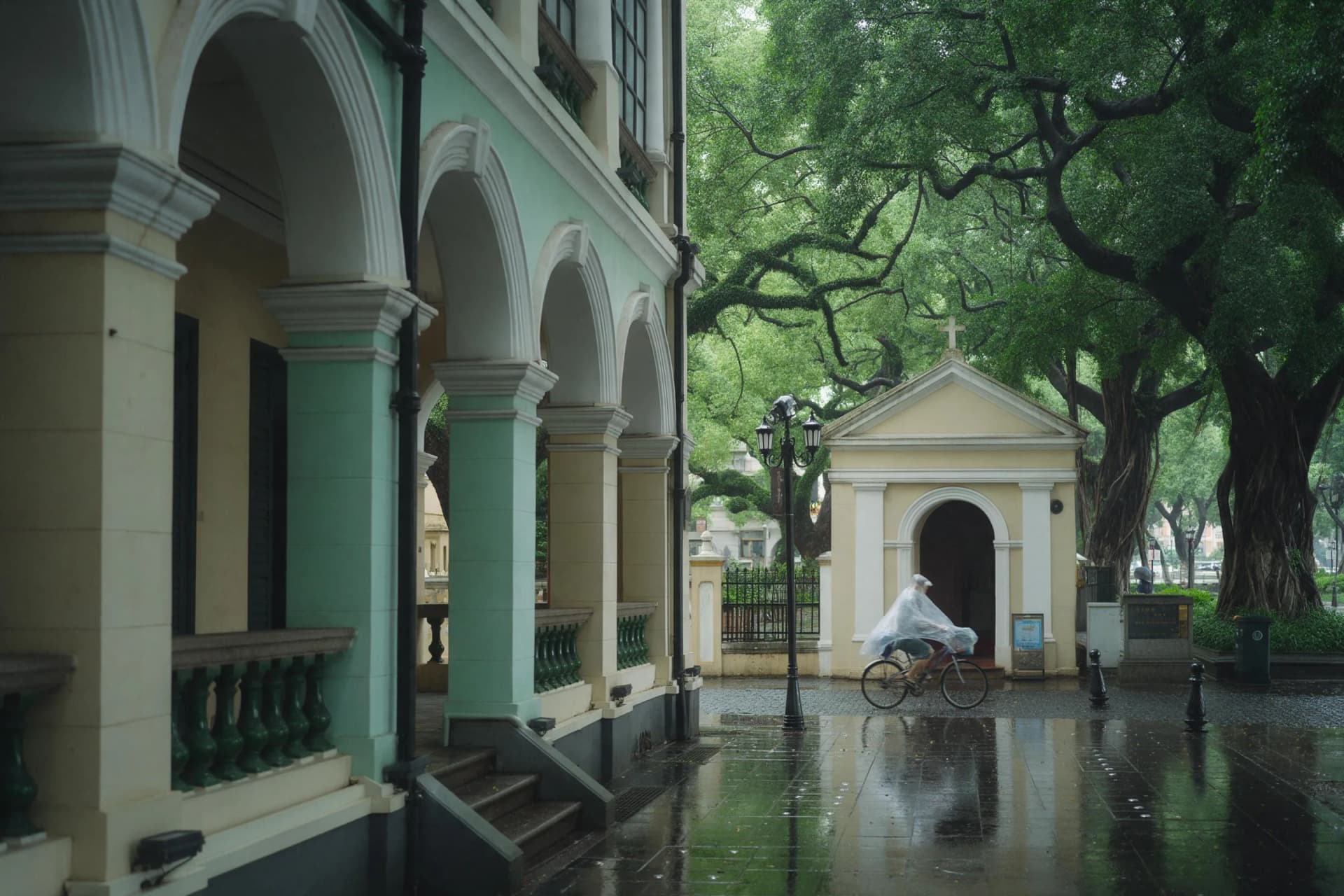
Then cross to Shamian, a sliver of an island in the Pearl River that Britain and France ran as a concession from the 1860s. The scale changes at once: banyan avenues, pastel arcaded villas, a small Catholic chapel, bronze statues along the embankment. Walk it in half an hour, then sit on the waterfront and watch the barges slide past, because the river is the reason all of this exists.
Guangzhou's headline sights cluster in Yuexiu. The Chen Clan Ancestral Hall, built by a clan of scholars in the 1880s and now the Guangdong Folk Art Museum, is the city's finest piece of Lingnan architecture; look up at the ceramic ridge figures before the display cases. Close by, the Temple of the Six Banyan Trees keeps a brick Flower Pagoda that has outlasted most of the city around it, and the Sun Yat-sen Memorial Hall anchors its own park. Climb Baiyun Mountain with the early tai chi crowd. Save Canton Tower for dusk, when the 604-meter spindle above the river glows through the haze; the ticket tiers are in the fact sheet.
Beyond breakfast, Guangzhou eats at its siu mei counters and noodle shops. Look for roast goose with lacquered, crackling skin hanging beside char siu and crisp roast pork, all chopped to order over rice. Order wonton noodles — springy egg noodles, a clear shrimp-and-pork broth, thin-skinned wontons — then finish with the sweets Guangdong does better than anyone: double-skin milk, ginger milk curd, cold mango sago. The streets around Beijing Road stay busy past midnight, so pace yourself.
End the day on the Pearl River. The promenade from Haizhu Square to Canton Tower passes floodlit bridges and the twin towers of Zhujiang New Town, and a night cruise turns the same skyline into a slow panorama; the fare depends on the boat and deck, so the fact sheet lists what to expect. On the water you can read the whole city in one line: the old concession behind you, the trading towers ahead, and the river that carried tea and porcelain to the world long before this was a destination. Book a day ahead in peak season.
Guangzhou is easy to move through. The metro is cheap, signed in English and reaches nearly every sight on this list; Alipay or WeChat Pay at the gate removes the need for cash. Base yourself in Liwan or Yuexiu for old-town lanes and morning tea within walking distance, or in Tianhe for towers and the fastest connections. If you are linking cities, Guangzhou South is the hub: Hong Kong and Shenzhen are both a short train ride away, and every passenger needs an original passport. The fact sheet gathers the airport, metro, ticket and rail details.
That is where we come in. Tell ChinaMira your dates and your appetite, and we will build the teahouse mornings, the Liwan walk and the river night into a route that also works with Hong Kong. Start with our China food guide for the wider Cantonese picture, read the Hong Kong guide if you are combining the two, book the trains with our high-speed rail guide, and check when to visit China before you fix your dates. Bring an empty stomach and a loose schedule — Guangzhou rewards both.
Good to know
- Airport
- Baiyun International (CAN), about 30 km north of downtown; Metro Line 3 reaches the city in about 30 minutes for USD 0.28-1.4, and taxis run USD 14-30.
- Metro
- 2 to 14 yuan by distance, roughly 6:00 a.m. to 11:30 p.m.; scan Alipay or WeChat Pay at the gate instead of buying a paper ticket.
- Best months
- Mid-October to December and March to April for dry, mild days; July to September is hot, humid and typhoon-prone.
- Morning tea
- Dim sum breakfast and brunch, about USD 7-14 per person at the popular halls; arrive before 11 a.m. for the full trolley round.
- Tickets
- Chen Clan Ancestral Hall about USD 1.4; Canton Tower about USD 21 adult for the 107F and 108F decks, open roughly 09:30–22:30; Pearl River night cruise about USD 11-28 by boat and deck.
- Rail
- Guangzhou South to Hong Kong West Kowloon about 1 hour (USD 26-30) and to Shenzhen North about 30 minutes; an original passport is required.
Frequently asked questions
What is Guangzhou's morning tea, and how does it work?
Morning tea, or yum cha, is breakfast and brunch built around a pot of tea and small plates of dim sum. Choose a tea first, then order from a trolley or tick a paper card as dishes arrive; the fact sheet's morning-tea row gives the cost and the best arrival window.
Is Guangzhou worth adding to a Hong Kong trip?
Yes. Guangzhou South and Hong Kong West Kowloon are a single train ride apart, and travelers clear Hong Kong immigration at West Kowloon, so the city slots in as a two- or three-day stop without a flight. The fact sheet lists the journey time and fare; see our Hong Kong guide for the other half.
What is the best time of year to visit Guangzhou?
The fact sheet's Best months row has the short answer, so plan around the dry, mild windows it names and avoid the National Day holiday week in early October, when trains and hotels across China sell out. The wet season is hot, humid and typhoon-prone, so keep indoor plans ready.
Do I need to speak Cantonese to visit Guangzhou?
No. Metro signs, ticket machines and major sights are in English, Alipay and WeChat Pay cover almost every payment, and DiDi books taxis by map pin. Older neighborhood cooks may speak only Cantonese, so keep a translation app and a photo of any dish you want to order.
Keep exploring
Plan with ChinaMira
Turn this into a trip
Use this guide as a starting point — we can handle the route, guides, trains and the visa invitation letter.