
Hong Kong Travel Guide: Peak Views, Harbor Ferries, and Neon-Lit Streets
Hong Kong packs a harbor, a mountain, and a hundred neighborhoods into one compact, fast-moving city. Ride the Star Ferry across Victoria Harbour, take the 1888 Peak Tram to sunset views, eat dim sum and roast goose in cha chaan tengs, wander Temple Street's night market, and day-trip to Lantau's Big Buddha or the beaches of Sai Kung. This guide covers the best months, transport cards, budgets, and easy itineraries.
Hong Kong hits you first as a city stacked on itself. Bamboo scaffolding climbs the side of a forty-story tower, a double-decker tram grinds past a Gucci window, and behind it all a green mountain drops straight into the sea. Hong Kong Island, Kowloon, the New Territories, Lantau, and more than two hundred outlying islands are stitched together by one of the world's best transport networks. Give it four or five days and the city stops feeling frantic and starts feeling wonderfully alive.
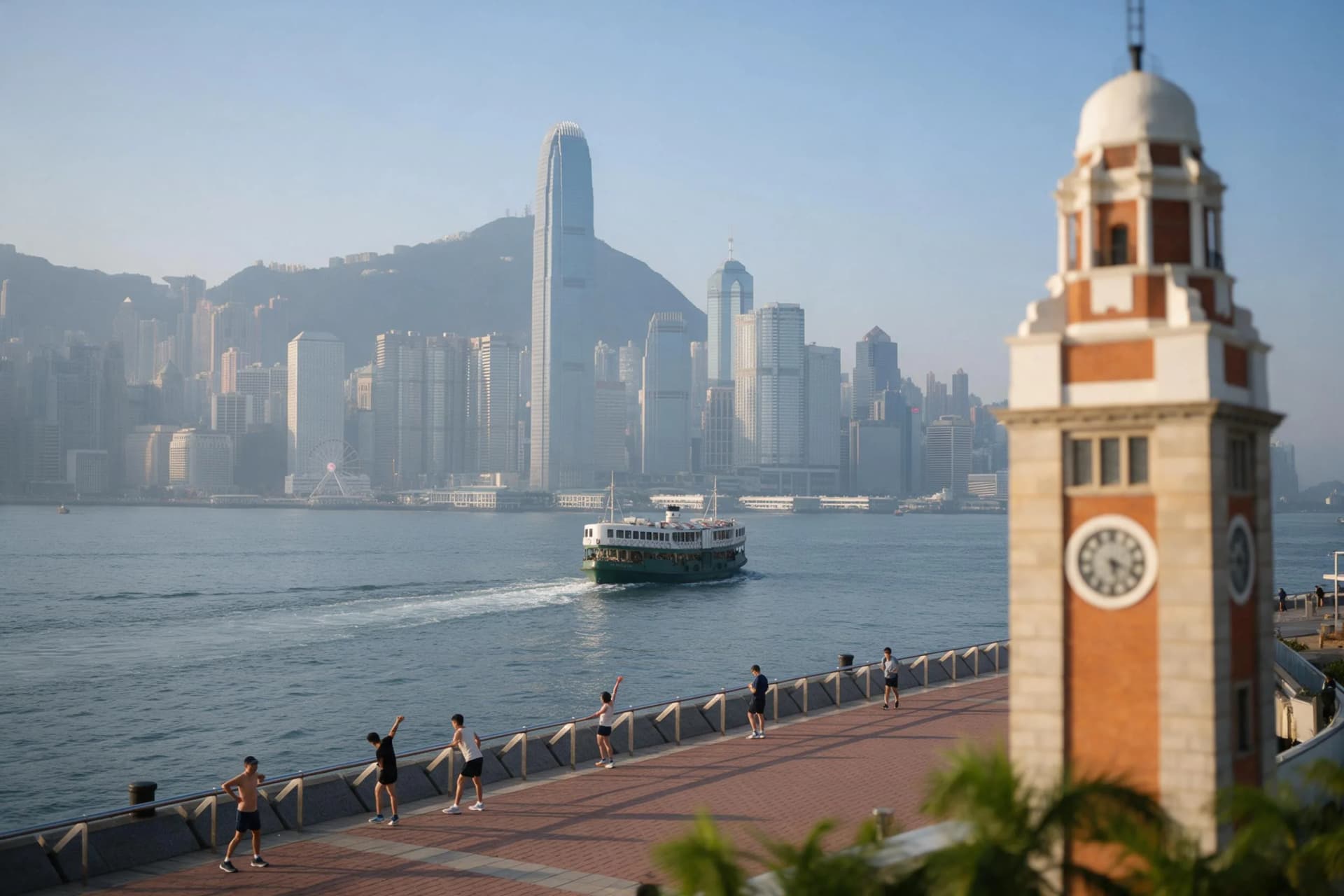
Begin on the water. Victoria Harbour is the reason the city exists, and the Star Ferry has crossed it since 1888 for the price of pocket change. Take it from Tsim Sha Tsui to Central, sit on the upper deck, and watch the skyline slide past for the ten-minute crossing. On the Kowloon side, the Tsim Sha Tsui promenade and the old Clock Tower are best at dawn, when the morning haze softens the towers and local runners own the waterfront. Come back at 8 p.m. for the nightly Symphony of Lights, when about forty buildings pulse with lasers and music across the harbor.
Then climb the Peak. Victoria Peak, at 552 meters, is Hong Kong Island's green crown, and the Peak Tram has been hauling passengers up since 1888. Book a timed ticket to skip the queue, ride to the top, and follow Lugard Road, an easy 3.5-kilometer loop around the hillside that opens onto the city from unexpected angles. Sunset is the classic hour. For a quieter descent, walk the steep paths to Central through dripping subtropical forest.
Kowloon is where the city gets loud and delicious. Spend an evening in Yau Ma Tei and Mong Kok, drifting from Temple Street Night Market, with its fortune tellers, Cantonese opera singers, and sizzling seafood stalls, into the Ladies' Market and the neon-lit crowds of Nathan Road. Between stops, duck into a cha chaan teng for milk tea, a pineapple bun, and a bowl of wonton noodles.
Culture sits close to all this noise. In West Kowloon, the M+ museum holds one of Asia's boldest collections of visual art, design, and moving image, and the Hong Kong Palace Museum shows treasures from Beijing on rotation. Nearby, Tai Kwun, the restored former Central Police Station compound, mixes heritage courtyards, jail cells, galleries, and cocktail bars. Add incense-heavy temples like Man Mo in Sheung Wan and Wong Tai Sin, where fortunes are still shaken from bamboo cups, and you have a city that layers the old and new without apology.
Escape the towers on Lantau. The Ngong Ping 360 cable car lifts you over the sea to the Tian Tan Buddha, a 34-meter bronze figure seated above Po Lin Monastery, where vegetarian lunches are served in the shadow of the Big Buddha. Then take a bus to Tai O, a stilt-house fishing village of shrimp paste, dried fish, and boat trips in search of pink dolphins. Families often add Hong Kong Disneyland; slower travelers take the ferry to car-free Cheung Chau or Lamma for seafood by the pier.
Hong Kong is also one of the great hiking cities, a fact that surprises almost everyone. The Dragon's Back, on Hong Kong Island, is a breezy ridge walk with the South China Sea on one side and the city on the other, finishing near the surf and seafood of Shek O. In Sai Kung, on the eastern New Territories, boat trips thread through the volcanic rock pillars of the Hong Kong Global Geopark, and quiet beaches wait at the end of short trails. Bring water, sun protection, and a charged Octopus card for the bus home.
Eat your way through the rest. Dim sum in the morning, with har gow, siu mai, and char siu bao chased by pots of pu'er tea, is a ritual. Order roast goose in Sham Shui Po, beef brisket noodles in Central, egg tarts from a bakery counter, and claypot rice in winter. Hong Kong's restaurants span glorious dai pai dong stalls to Cantonese fine dining. If you only book one meal in advance, make it dim sum at a busy old-school teahouse.
Getting around is genuinely easy. Buy an Octopus card at the airport or any MTR station and tap onto the subway, buses, trams, ferries, and even convenience stores. The Airport Express reaches Central in about 24 minutes, and the MTR itself is clean, cheap, and English-signed. Currency is the Hong Kong dollar, English is widely spoken alongside Cantonese, and tipping is not expected, though many restaurants add a ten percent service charge. October through December is the golden window, dry, clear, and mild; spring brings humidity and fog, summer turns hot and stormy, and typhoon signals can halt ferries and shut attractions between May and November.
Most visitors from the United States, the United Kingdom, the European Union, and many other countries enter Hong Kong visa-free for between thirty and one hundred eighty days, so check the current rules for your passport before booking. Four days covers the harbor, the Peak, Kowloon's markets, and dim sum; add two more for Lantau, a hike, and a slow afternoon on an outlying island. Tell our ChinaMira travel designers what you are imagining, whether that is sunrise on the Tsim Sha Tsui promenade, a food crawl through Sham Shui Po, or an onward connection by high-speed rail into mainland China.
Good to know
- Currency
- Hong Kong dollar (HK$); cards and Octopus accepted almost everywhere, though market stalls prefer cash
- Language
- Cantonese and English are both official; English is widely spoken in hotels, MTR stations, and restaurants
- Entry
- Visa-free for US, UK, and most EU citizens for 30-180 days; check your passport's current allowance
- Best time to visit
- October to December for dry, clear, mild weather; avoid the July-September typhoon peak if you can
- Getting around
- MTR subway, tram, bus, and ferry all take the Octopus card; the Airport Express reaches Central in about 24 minutes
- Tipping
- Not customary; many restaurants add a 10 percent service charge, and rounding up a taxi fare is plenty
Frequently asked questions
Do US citizens need a visa for Hong Kong?
No. US passport holders may enter Hong Kong visa-free for up to 90 days for tourism. Many other nationalities get 30, 90, or 180 days, so always confirm the current rules for your passport before you fly.
How many days do you need in Hong Kong?
Four days is enough for Victoria Harbour, the Peak, Kowloon's markets, and a proper dim sum breakfast. Add two more days for Lantau Island, the Big Buddha, a Dragon's Back hike, or a beach day in Sai Kung.
What is the best time of year to visit Hong Kong?
October through December is the sweet spot, with dry, clear skies and mild temperatures in the low twenties Celsius. Spring is humid and hazy, summer is hot and stormy, and typhoon season runs roughly from May to November.
Is Hong Kong expensive for travelers?
It can be either. Hostels and guesthouses, MTR rides, and street food are affordable, while harbor-view hotels and fine dining run high. Budget travelers can eat very well for under HK$100 a meal at cha chaan tengs and noodle shops.
Keep exploring
Plan with ChinaMira
Turn this into a trip
Use this guide as a starting point — we can handle the route, guides, trains and the visa invitation letter.