
City Guide
Shanghai Food Guide 2026: 5 Signature Dishes, Prices & Where to Eat
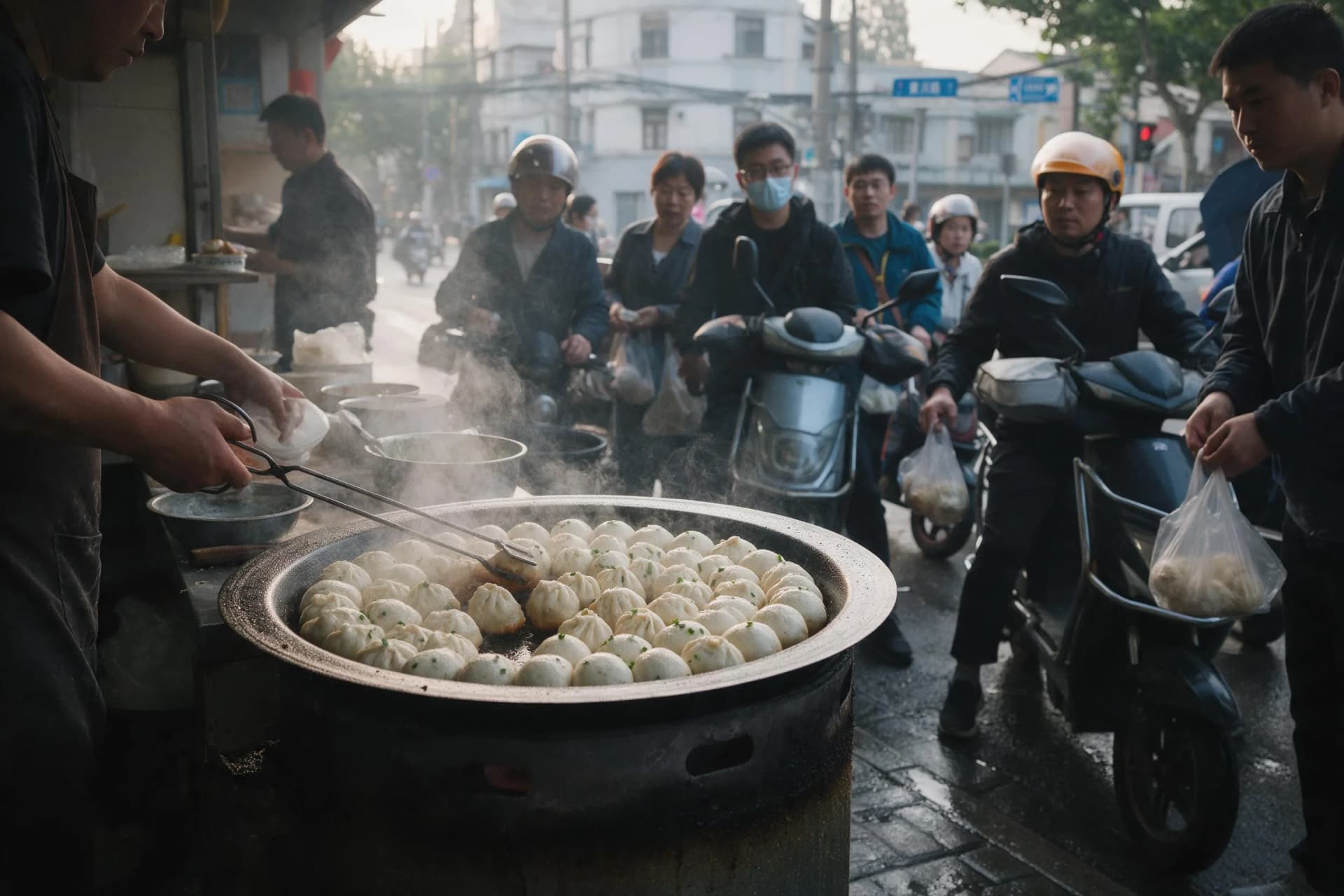
Shanghai is a city that eats on a schedule, and the schedule is the story: buns before 9 a.m., pork belly at lunch, crab once autumn arrives. This guide maps five signature dishes to real neighborhoods and real prices, then hands you one breakfast street, a Buddhist vegetarian institution and a halal kitchen that has fed Shanghai since 1891.
Shanghai's food scene is best eaten over three unhurried days on roughly ¥300–450 ($42–63) per person per day: begin with a steaming street breakfast, work through the five signature dishes below, then finish with Michelin-starred vegetarian cooking or a 130-year-old halal kitchen. Prices in this guide reflect October 2026.
1. Xiaolongbao (soup dumplings). Shanghai's most imitated dish is a paper-thin dumpling holding hot pork broth and a twist of dough. Jia Jia Tang Bao on Huanghe Road has folded them by hand since 1986 and sells a basket of twelve for ¥25–40, while Nanxiang Mantou Dian at Yu Garden charges about ¥90 for a crab-roe steamer that is genuinely worth the queue. Eat each one in a single bite with the spoon underneath; that soup is scalding, and locals will not warn you twice.
2. Shengjianbao (pan-fried pork buns). Thicker-skinned than xiaolongbao and crisped in a cast-iron pan, these arrive dusted with sesame and scallion. Yang's Fried Dumplings, founded in 1994 and now a citywide chain, charges ¥12 for four pork buns and roughly ¥20 for shrimp. Order them with a bowl of curdled soy milk for a breakfast that costs less than a latte at home.
3. Hongshao rou (red-braised pork belly). Cubes of pork belly are simmered in Shaoxing wine, rock sugar and dark soy until the fat turns glassy and the sauce lacquers the rice. Small family kitchens do it best: Lan Xin on Jinxian Road and Old Jesse on Tianping Road, a Michelin Bib Gourmand, both serve it for ¥68–128. Order plain rice and a plate of greens to cut the sweetness.
4. Cong you ban mian (scallion oil noodles). This is the dish that tells you whether a Shanghai kitchen is paying attention. Scallions are fried slowly in oil until dark and fragrant, then tossed with wheat noodles and a splash of soy. Neighborhood shops such as A Niang Mian on Sinan Road sell a bowl for ¥18–28, and it is the cheapest way to eat extremely well in the city.
5. Da zha xie (steamed hairy crab). Between late October and December, Shanghai eats crab with ginger vinegar and warm yellow wine. Wang Bao He on Fuzhou Road, trading since 1744, serves pairs from ¥268 and full crab banquets; wet-market stalls sell single females for ¥80–150 depending on size and season. Ask for female crabs early in the season for the richest roe, and never rush the picking.
Where to eat breakfast: Huanghe Road. This one-kilometer strip between Nanjing West Road and Beijing West Road packs more than 60 eateries into a block and a half, and it wakes up at 6:30 a.m. with dan bing crepes, steamer baskets and shao mai. Arrive between 7 and 9 a.m. to eat shoulder to shoulder with office workers; People's Square Station Exit 9 is a 350-meter walk away. Wujiang Road, near West Nanjing Road station, is the polished pedestrian cousin for an evening snack crawl.
Vegetarian and halal options. Gongdelin at 445 Nanjing West Road has served Buddhist vegetarian cooking since 1922, turning mushroom and gluten into convincing "meat" dishes for ¥25–55; the dining room runs 10:30 a.m. to 9 p.m. For halal, Hong Chang Xing on Yunnan South Road has been pulling handmade noodles and simmering mutton hotpot since 1891, with bills landing around ¥80–150 per person, open 10 a.m. to 10 p.m. Both are an easy metro hop from the Bund.
How to plan your eating days. Book one big meal per day and let street food fill the gaps. Day one: breakfast on Huanghe Road, xiaolongbao for lunch, crab or pork belly for dinner. Day two: temple vegetarian lunch, scallion noodles at night. Take the metro — a ride costs about ¥3–5 — and pay with Alipay, which takes international cards. Compare this with our Chengdu food guide if you are building a whole eating trip across China.
Good to know
- Daily food budget
- ¥300–450 ($42–63) per person per day, October 2026
- Xiaolongbao
- ¥25–40 per basket at Jia Jia Tang Bao; about ¥90 for crab-roe at Nanxiang Mantou Dian
- Shengjianbao
- ¥12 for four pork buns at Yang's Fried Dumplings, open 7 a.m.–9 p.m.
- Breakfast street
- Huanghe Road: about 1 km, 60+ eateries, peak 7–9 a.m., 350 m from People's Square Station Exit 9
- Vegetarian pick
- Gongdelin, 445 Nanjing West Road, Buddhist since 1922, mains ¥25–55, 10:30 a.m.–9 p.m.
- Halal pick
- Hong Chang Xing, Yunnan South Road, since 1891, ¥80–150 per person, 10 a.m.–10 p.m.
Frequently asked questions
How much should I budget for food in Shanghai?
Plan for two modest meals and one bigger splurge each day. Street breakfasts, noodle shops and dumpling counters keep costs low, so you can put the savings toward a crab dinner or a tasting menu without blowing the trip budget.
Can vegetarians and halal travelers eat well in Shanghai?
Yes. Buddhist vegetarian restaurants such as Gongdelin have fed the city for a century, and Fu He Hui holds a Michelin star for plant-based fine dining. Halal diners head to Hong Chang Xing on Yunnan South Road for hand-pulled noodles and mutton hotpot.
What time do Shanghai restaurants close?
Most sit-down kitchens take their last order around 8:30 p.m. and shut by 10 p.m., though noodle shops and street stalls near metro stations keep serving past midnight. Breakfast stalls start setting up before 7 a.m., so mornings are never a problem.
Do I need cash to eat in Shanghai?
Rarely. Nearly every stall and restaurant displays a QR code for Alipay or WeChat Pay, and both apps now accept international bank cards. Carry a small amount of paper yuan anyway for older shops, temple canteens and the occasional broken scanner.