
Xiamen Travel Guide: Gulangyu's Piano Island and the Fujian Coast
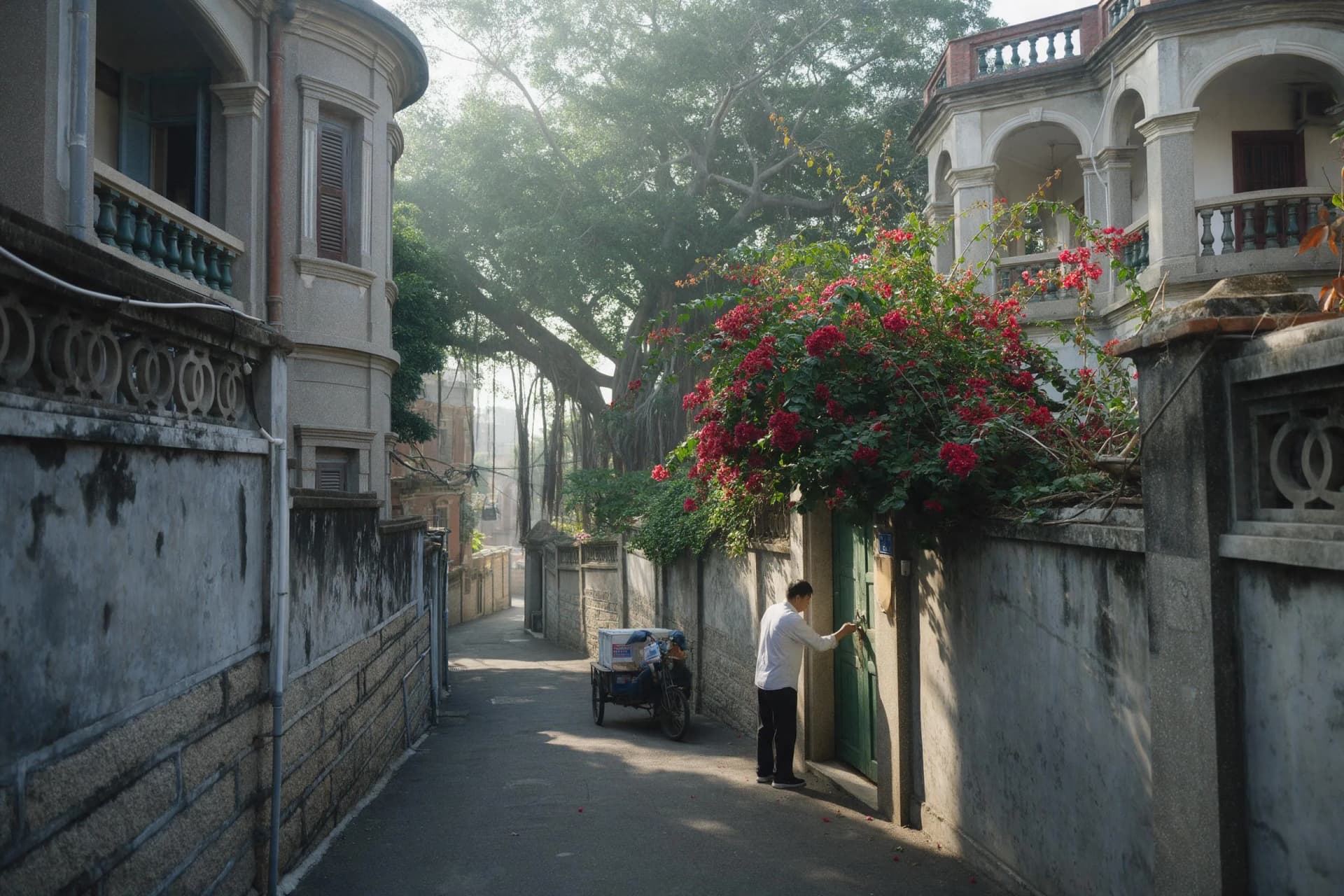
Xiamen pairs a modern port city with Gulangyu, the car-free island where a century-old international settlement of villas, churches and consulates still houses ordinary families. This guide covers the ferry, the temples and beaches across the water, the Hokkien snacks worth planning around, day trips to the Hakka tulou, and how many days to give it all.
Xiamen keeps its history on the water. From the ferry pier, the towers of Siming rise behind you and Gulangyu sits ahead, a green island with no cars, no bicycles and more than two hundred pianos. Locals call it Kulangsu, and they will tell you that you have not really seen Xiamen until you have stood on it. The claim holds: the villas, churches and consulates of a century-old international settlement still stand in the shade of old banyan trees, and people still live in them.
One dated sentence is enough for the dynastic background. After the First Opium War, the Treaty of Nanking in 1842 forced Xiamen open as a treaty port, and foreign residents soon settled across the water on Gulangyu. What grew there over the following decades is why this guide exists. The island became an international settlement, with consulates from thirteen countries, its own municipal police, and merchants and missionaries who built Victorian, Art Deco and Southeast Asian styles into one another; UNESCO listed the Kulangsu Historic International Settlement in 2017. What separates it from a film set is that it is a working neighborhood: laundry hangs between the columns, schoolchildren cross the lanes, and the piano museum honors a musical habit that never left.
Give Gulangyu a full day and start it early. The tourist ferry leaves from Dongdu Wharf on the Xiamen side, and the fact sheet carries the fares, the crossing time and the passport booking rules. Cars and bicycles are banned, so you walk; the only vehicles are small electric buggies. Climb Sunlight Rock before the heat and the tour flags arrive, then wind down through Shuzhuang Garden, whose sea-view pavilions and piano museum sit right at the waterline. The lanes reward aimless wandering: Longtou Road for snacks, Fujian Road for villas, and the old organ hall at Bagua Lou for the strangest and loveliest instrument collection in China. Midday is crowded and hot, so plan a long lunch and come back out for the late-afternoon light.
Across the water, Xiamen Island has its own rhythm. Nanputuo Temple sits at the foot of the Wulao Peaks, an active Buddhist complex with a vegetarian restaurant and a row of incense sellers at the gate; arrive before eight for quiet. Next door, Xiamen University, founded by the overseas-Chinese philanthropist Tan Kah Kee, needs a real-name reservation to enter, so book a day or two ahead. Further along the south coast, Hulishan Fortress still points its German Krupp cannon at the sea, a reminder of the late-Qing scramble to defend the coast. Then follow Huandao Road, the ring road that traces the island's beaches, by bicycle or by bus.
Come back into town for the streets that carry the everyday city. Shapowei, a former fishing harbor, now holds studios, coffee windows and a stubborn fishing-boat slipway, and it is at its best at dusk. Zhongshan Road is the old arcade shopping street, its covered walkways built for hard sun and sudden rain. Yundang Lake is where residents jog at sunrise, and the wetland park at Wuyuan Bay is the quietest corner of a busy island. Little of it is ancient; much is twentieth-century and lived-in, which is the point.
Xiamen's food is a Hokkien table with a Southeast Asian accent, and the snacks are the main event. Start with shacha noodles: a broth built from peanut, dried shrimp and chili, poured over wheat noodles and whatever you point at, whether squid, pork liver or a shrimp. At Lao'er Market, just off Zhongshan Road, the shacha stall opens at six in the morning, and the fact sheet lists the going price. Oyster omelet, o-a-jian, is a chewy sheet of sweet-potato starch and egg folded around fresh oysters; eat it from a market stall with chili sauce. Then peanut soup at Huangzehe, boiled until the peanuts collapse, with a fried dough stick for dipping. If you are brave, order tu sun dong, the chilled sea-worm jelly, and finish with a cool bowl of xiancao.
With an extra day, leave the island. The Hakka earthen buildings of the Fujian Tulou, round fortress-like clan houses of rammed earth, lie a two- to three-hour drive inland around Yongding and Nanjing counties, and are the region's other great built history. Closer to town, Jimei holds the Tan Kah Kee Memorial Museum and a leafy study village that explain the overseas-Chinese money and ambition behind modern Xiamen. Boats also cross from Wutong Port to Kinmen, the island held by Taiwan six kilometers offshore, on a short and ordinary ferry ride.
Xiamen works in almost any month, but the fact sheet's best-months row explains the two comfortable windows and the summer storm risk. Build the trip around two slow days: one for Gulangyu, one for the temples, beaches and back lanes of Xiamen Island, with a half-day free for snacks and a dusk ferry ride. If you are continuing north, our Shanghai guide covers the other end of the rail line; if you are heading south, the direct train to Hong Kong West Kowloon makes a natural next stop. Use our month-by-month guide to lock your dates, and our Chinese food guide to decode the menus. Tell ChinaMira when you can travel and what you want to see, and we will build the itinerary, book the real-name ferry tickets, and point you toward the quiet side of the island.
Good to know
- Getting there
- Xiamen North is the high-speed hub: 2h40m-3h50m to Shenzhen from USD 28 in second class, about 5h to Shanghai Hongqiao from USD 52, 3h33m-4h07m to Hong Kong West Kowloon from USD 53, and roughly 1h to Fuzhou from USD 11. Gaoqi Airport is 10 km from downtown.
- Gulangyu ferry
- Tourists board at Dongdu (Xiagu) Wharf: USD 4.9 round trip on the ordinary sailing to Sanqiutian or Neicuo'ao (return valid within 20 days) or USD 11 premium; night crossings leave Lundu Wharf opposite Zhongshan Road for USD 4.9. The ride takes about 8 minutes and tickets are booked with a passport via the Yujian Xiamen mini-program or at the window.
- Gulangyu tickets and hours
- Sunlight Rock costs USD 7 and opens 8:30-18:00 from June 1 to September 30 and 8:30-17:30 from October 1 to May 31. Multi-site combo passes covering Sunlight Rock, Shuzhuang Garden, the organ and piano museums and more run about USD 16-18.
- City transport
- Xiamen Metro fares start at USD 0.28 for the first 4 km and rise to USD 0.85 for 28-43 km; the BRT and city buses fill the gaps between the island and Jimei. Ferries, not bridges, are the only way onto Gulangyu.
- Best months
- March-May and October-November are the comfortable windows. June-September is hot and wet, with three or four typhoons a year on average between July and September; winter is mild, and the annual average sits near 21°C.
- Food and costs
- At Huangzehe Peanut Soup, 22-24 Zhongshan Road (07:30-22:00), a bowl of peanut soup is about USD 0.85 and the average spend is USD 3.4; shacha noodles at Lao'er Market start near USD 2.1, and a full day of snack-hopping runs about USD 14 a person.
Frequently asked questions
How do I get to Gulangyu Island?
Tourists use the ferry from Dongdu Wharf on the Xiamen side, not the local crossing from Lundu Wharf; the fact sheet lists the ordinary and premium fares plus the night service. Book with your passport a day or two ahead in peak season.
How many days do you need in Xiamen?
Two full days cover Gulangyu and the island's temple, fort and beaches; add a third for a Fujian Tulou day trip or a slow food day. The fact sheet's rail and ferry rows help you pace your arrival and departure.
What should I eat in Xiamen?
Start with shacha noodles and oyster omelet, then peanut soup at Huangzehe on Zhongshan Road, and finish with tu sun dong or xiancao. The fact sheet names the stalls and what they charge.
When is the best time to visit Xiamen?
The fact sheet's best-months row gives the two comfortable windows; spring and autumn are the picks, while July to September brings typhoon risk and heavy humidity.
Keep exploring
Plan with ChinaMira
Turn this into a trip
Use this guide as a starting point — we can handle the route, guides, trains and the visa invitation letter.