
Travel Guide
Lhasa in Three Days: Potala Palace, Barkhor Kora and Sera
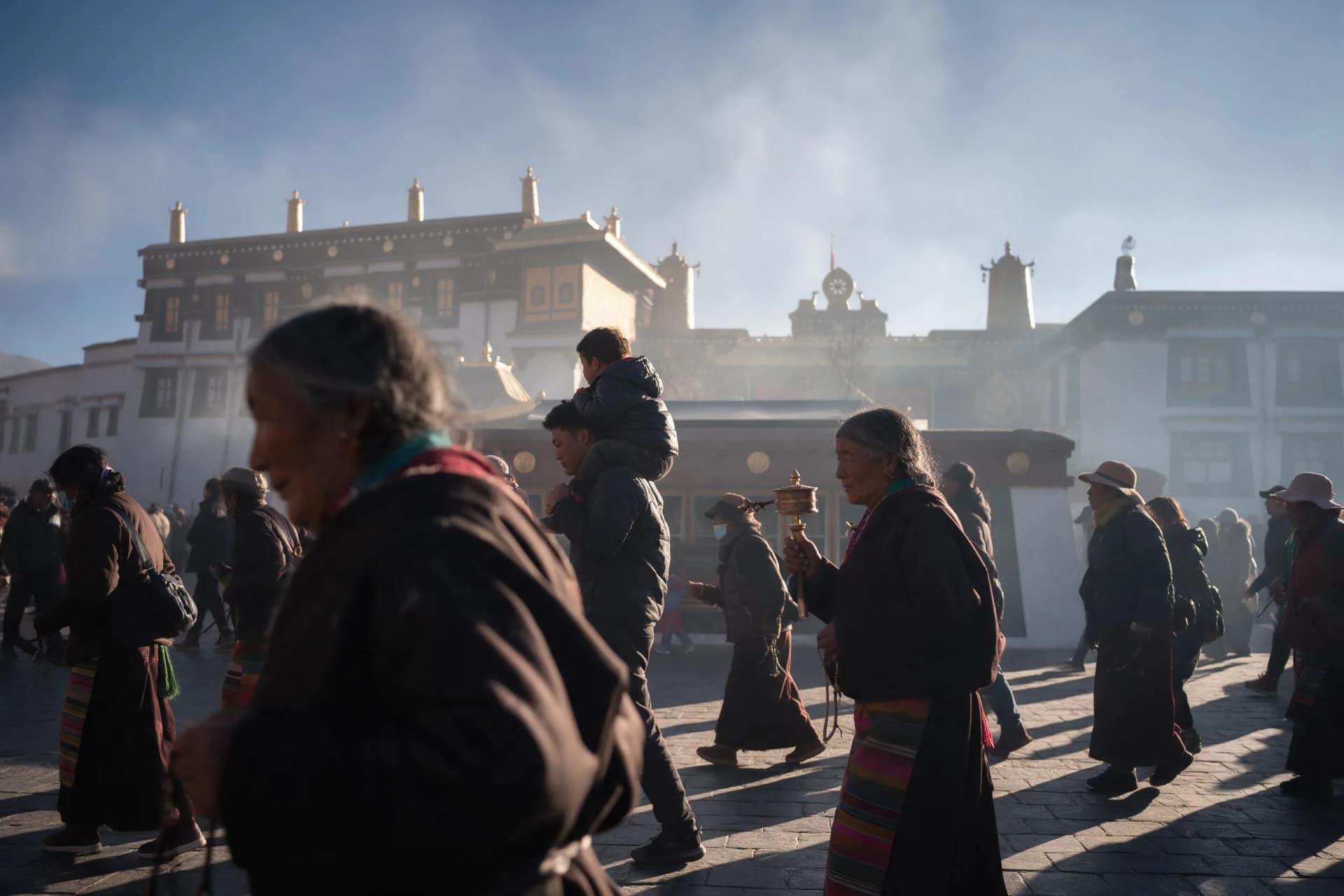
Three days is the right dose of Lhasa: one day to acclimatize and walk the Barkhor kora, one for a timed Potala Palace visit and Sera's monk debates, and one for Drepung Monastery and the Lhasa River. This itinerary lays out each day in order, with permits, tickets, timings, and transport notes that keep the trip running smoothly.
Lhasa announces itself slowly. The plane drops through a gap in the mountains, a dry ochre valley opens below, and the first thing you notice is not the Potala but the light — thin, bright, impossibly clean at 3,650 meters (11,995 feet). Step outside and the air is cool even in July. This is a city where the body needs a day to catch up and the heart wants to run ahead. Three days is the right length: long enough to walk the circuit around the Jokhang more than once, short enough that every morning still feels like a discovery.
Before any of it, handle the paperwork. Foreign travelers cannot enter Tibet independently. You need a Tibet Travel Permit arranged through a registered agency, usually 15 to 20 days ahead, and you show it to board the flight or train into Lhasa. A licensed guide accompanies you at the major sites. Book the Potala Palace the moment your dates firm up, because entry is timed and capacity is capped: peak-season tickets from May through October cost CNY 200, dropping to CNY 100 from November to April. Off-season travel is quieter, colder, and far easier to reserve.
Day one is for altitude and the Barkhor. Sleep in, drink water, skip the alcohol, and take the morning at half speed. By afternoon, walk to the Jokhang Temple, the spiritual heart of the city, and join the kora — the clockwise pilgrim circuit around it. Tibetans spin prayer wheels, murmur mantras, and shuffle past stalls selling butter lamps, coral beads, and dried yak meat. Walk one full loop, then climb to a rooftop cafe above the crowd with sweet tea and let the city wash over you. Jokhang entry is CNY 85; the circuit itself is free and busy from dawn to dark.
Day two belongs to the Potala Palace. Arrive at your assigned time — the ticket names one, and latecomers are turned away. The climb is real: a long stairway up the Red Hill, taken slowly, with pauses that feel like reverence and are actually oxygen. Inside, narrow corridors open onto chapels of gilded statues, painted beams, and the burial stupas of past Dalai Lamas. Guards keep visitors moving, so savor what you can. In the late afternoon, head north to Sera Monastery, where monks debate in the courtyard from about 3 to 5 pm, clapping their hands to punctuate an argument. It is philosophy as theater, and it stays with you.
Day three opens early at Drepung Monastery, once the largest monastery in the world, spread across a hillside west of town. Go at opening, when the whitewashed lanes are quiet and monks are still filing toward morning prayer; the kora path behind the main halls gives you the whole Lhasa Valley. Come down for lunch and give the afternoon to the Lhasa River, the wide steel-blue braid that runs past the city before joining the Yarlung Tsangpo. Locals picnic and fish along its banks. If you leave by rail, the Z train to Xining takes about 21 hours and rolls out of the valley in the evening; the airport, about 60 km (37 miles) southwest of the center, is roughly an hour away by road.
Eat simply and often. Tibetan food is built for altitude: yak butter tea, hearty noodle soups, momos steamed or fried, and thenthuk, a chewy pulled-noodle soup that costs a few yuan and fixes almost anything. Sweet tea, milky and lightly sugared, is the city's social glue — order a thermos at a Barkhor teahouse and watch a morning disappear. Our Lhasa food guide maps the teahouses and family kitchens worth seeking out, from a hole-in-the-wall momo counter to a courtyard restaurant serving a proper Tibetan set dinner.
Respect the altitude and Lhasa becomes generous. Symptoms of altitude sickness usually surface in the first 24 to 48 hours, so treat day one as an acclimatization day, drink more water than feels necessary, and eat lightly. Do not schedule a full day of stair-climbing on arrival, and ask a doctor about acetazolamide if you have struggled at height before. Evenings are cool year-round, while midday sun in June is fierce. Carry a hat, sunglasses, sunscreen, and a light shell, and remember that Lhasa's pharmacies and clinics are well used to treating travelers who pushed too hard.
Three days in Lhasa is a beginning, not a checklist. Walk the kora at dawn, climb slowly, sit with tea, and let the mountains set the pace. If you would rather have the permits, timed Potala tickets, guide, and onward train seats handled before you land, tell us your dates and what you want from Tibet — our ChinaMira specialists build the Lhasa stretch around them, and our China visa guide sorts the entry paperwork first.
Good to know
- Altitude
- Lhasa sits at about 3,650 m (11,995 ft); allow the first 24–48 hours for acclimatization and drink plenty of water.
- Permit
- Foreign travelers need a Tibet Travel Permit arranged through a registered agency, usually 15–20 days ahead, plus a valid Chinese visa.
- Tickets
- Potala Palace CNY 200 peak season (May–October) and CNY 100 off-season; Jokhang Temple CNY 85; Sera and Drepung monasteries about CNY 50–60 each.
- Getting there
- Flights land at Lhasa Gonggar International Airport (LXA), about 60 km (37 mi) southwest of the center and roughly an hour by road; the Z train from Xining takes about 21 hours.
- Best months
- April–June and September–October for clear, mild days; July–August is wetter; November–March is sunny, cold, and cheaper.
- Getting around
- The Barkhor and old town are walkable; metered taxis and ride-hailing cover the Potala, Sera, and Drepung, and city buses cost CNY 1–2.
Frequently asked questions
How many days do you need in Lhasa?
Three days, or about 72 hours on the ground, covers the Barkhor kora, the Jokhang, a timed Potala Palace visit, and monasteries such as Sera and Drepung. Add a fourth day if you want a gentler acclimatization start or a side trip beyond the valley.
How much do Lhasa's main tickets cost?
The Potala Palace costs CNY 200 in peak season (May through October) and CNY 100 from November to April; the Jokhang Temple is CNY 85, and Sera and Drepung monasteries run about CNY 50 to 60 each. Book the Potala ahead, because entry is timed and capped.
When is the best time to visit Lhasa?
April to June and September to October bring clear skies and mild days, with highs near 20°C (68°F) and cold nights. July and August are the green rainy season, while November through March is sunny, sharply cold, and cheapest for palace tickets.
Do foreigners need a permit to visit Lhasa?
Yes, foreign visitors need a Tibet Travel Permit arranged through a registered agency, typically 15 to 20 days before departure, plus a valid Chinese visa. The permit is checked when you board the flight or train to Lhasa, and a licensed guide accompanies you at the major sites.