
Kashgar & Urumqi Travel Guide: China's Far-West Silk Road
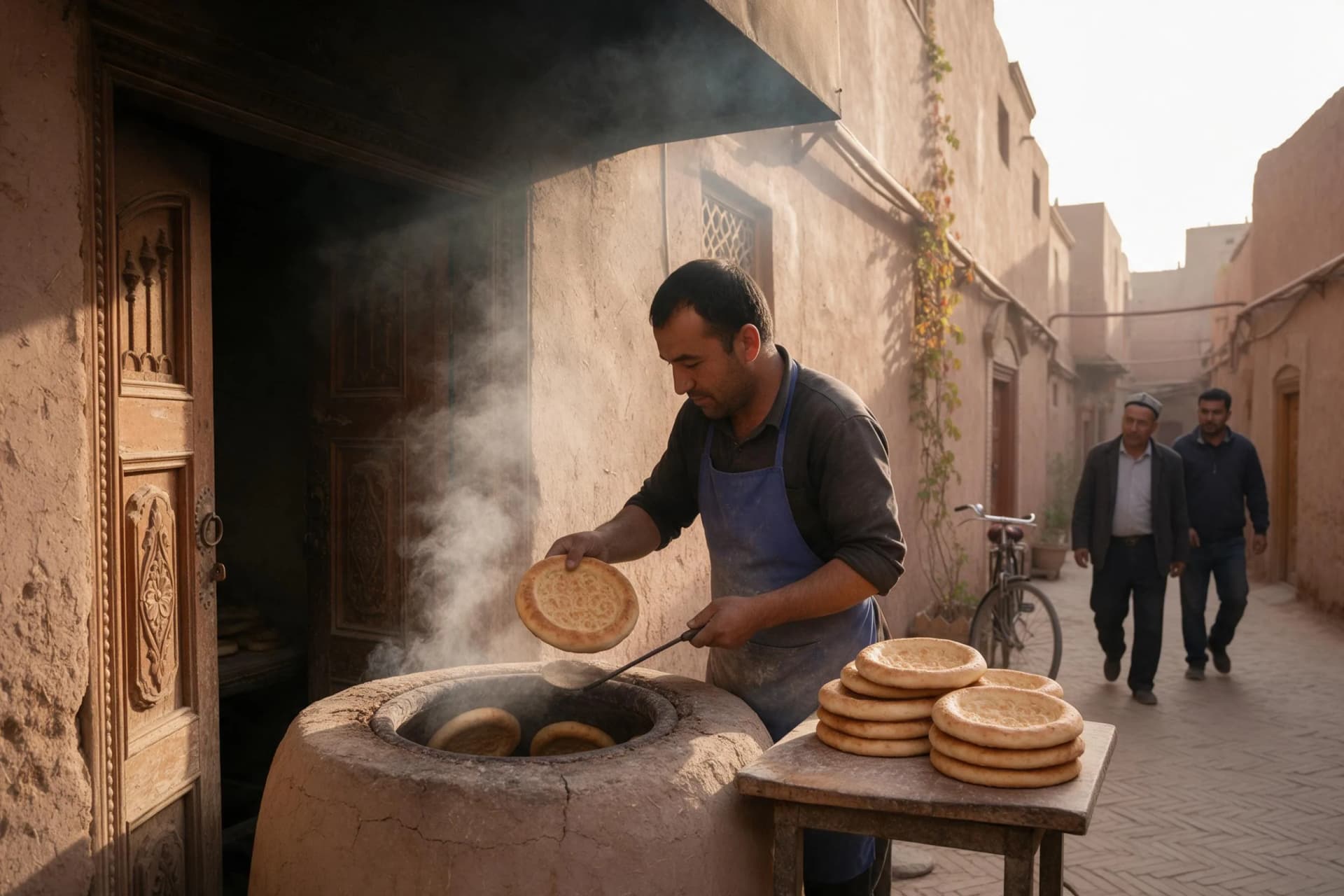
Kashgar is China's westernmost oasis city, a maze of mud-brick lanes, teahouses and bazaars that has traded on the Silk Road for two thousand years. Urumqi, the regional capital and air hub, pairs it with a superb museum, the alpine Heavenly Lake and big-plate chicken. This guide covers the Old Town, the Sunday livestock market, the trains and flights between the two, food, permits and the best months to go.
Kashgar sits at 1,270 meters in the far west of China, closer to Islamabad and Bishkek than to Beijing. For more than two thousand years this oasis has been where the Silk Road's northern and southern routes met, and the city still feels like a crossroads: Uyghur spoken in the lanes, Turkish and Persian echoes in the food, and a horizon that ends in snow-covered Pamir peaks. Pair it with Urumqi, the regional capital 1,475 kilometers northeast, and you get both the old Silk Road and the modern gateway that connects it to the rest of China.
Getting there is easier than the distance suggests. Flights from Urumqi to Kashgar take about two hours, and the fastest overnight sleeper train, currently Z6516, leaves Urumqi around 8:40 p.m. and pulls into Kashgar at 8:10 the next morning, roughly eleven and a half hours later. Other trains take fifteen to nineteen hours, so book a soft sleeper early, especially in summer. One quirk to know: Xinjiang runs on Beijing time officially, but daily life follows a looser local rhythm about two hours behind, so shops open late and summer sunsets can arrive after 10 p.m. by the clock.
Give Kashgar at least two full days, and start in the Old Town, a protected national scenic area of ochre mud-brick houses, carved wooden doors and lanes that fold into each other like a puzzle. Go early, around 8 or 9 a.m., when residents sweep their steps, bakers slide naan into tandoor ovens and the light is still soft. The restored quarter around Id Kah is the polished face of the Old Town, but walk ten minutes in any direction and you find copper-beaters, violin makers, hat sellers and tea houses where old men play cards over bottomless pots of black tea. Doorknockers matter here: round ones were traditionally for men, long ones for women, and they still work as a quiet doorbell.
At the center stands the Id Kah Mosque, built in 1442 and the largest mosque in China, with room for up to 20,000 worshippers across its courtyard and prayer hall. Visitor hours are limited and can change, so check your hotel or a local guide the day before, dress modestly, cover your shoulders and knees, and keep your voice low. Northeast of town, the Apak Khoja Mausoleum is a seventeenth-century tomb complex crowned with a tiled dome, known to many travelers by its old nickname, the Fragrant Concubine's tomb. The real spectacle, though, is the Sunday livestock market on the western edge of the city, where herders arrive with sheep, goats, cattle and horses, and the bargaining is loud, fast and entirely serious. Come before 11 a.m., bring small cash, and ask before photographing people.
Kashgar is one of the best eating cities in China. Order polo, the local rice pilaf cooked with lamb, carrots and cumin; laghman, hand-pulled noodles with a peppery tomato-and-pepper sauce; and samsa, crisp baked dumplings straight from the tandoor. Naan is a staple, stamped and baked in clay ovens, and the kebabs grilled over charcoal on every corner need only cumin, chili and salt. Wash it down with thick yogurt, pomegranate juice or sweet melon in late summer, then finish with raisins, walnuts and dried apricots from the bazaar. In Urumqi, do not miss dapanji, the big-plate chicken stewed with potatoes and hand-pulled belt noodles.
Urumqi rewards a day or two before or after Kashgar. The Xinjiang Regional Museum is free, closed Mondays, and holds the extraordinary Silk Road galleries and the Loulan Beauty, a mummy roughly 3,800 years old. The International Grand Bazaar is touristy but lively, and the night food streets around it are genuinely good. For landscape, drive about two hours to Heavenly Lake, an alpine pool at nearly 1,900 meters tucked beneath the 5,445-meter Bogda Peak, or head an hour south to the Nanshan pastures, where Kazakh herders graze horses and yurts serve milk tea in summer.
Practical notes. Bring your passport everywhere: checkpoints, train stations, museums and some bazaars ask for it, and hotels register foreign guests by law. Cash is rarely needed in cities, since Alipay and WeChat Pay linked to an international card work widely, but a few hundred yuan helps at the Sunday market. If you plan the Karakoram Highway toward Karakul Lake and Tashkurgan, arrange the trip through a licensed agency, as border-area access and permits for foreign travelers change often. The sweet spots for weather are mid-May to June and September to October; July and August are hot in Kashgar, and winter is cold, dry and wonderfully quiet. Altitude is gentle in both cities, though Tashkurgan sits near 3,100 meters, so take that leg slowly.
Ready to walk the lanes where caravans once loaded up for Samarkand? Tell ChinaMira your dates and travel style, and we will help you time the Sunday livestock market, reserve sleeper berths or flights between Urumqi and Kashgar, add the Pamir or Heavenly Lake at the right pace, and build a far-west itinerary that leaves room for a slow afternoon of tea and naan. Explore our Xinjiang itineraries, or send us a message and we will start planning today.
Good to know
- Urumqi-Kashgar trains
- 1,475 km (917 mi) with about nine pairs of trains daily. The fastest, Z6516, leaves Urumqi at 20:40 and arrives in Kashgar at 08:10 the next morning (11 h 30 min); the return Z6518 leaves Kashgar at 21:30 and reaches Urumqi at 09:00. Soft sleeper costs USD 68-70, hard sleeper USD 45-61 and hard seat USD 24-34. All other services take 15-31 hours, so reserve a berth early in summer.
- Flights and Urumqi airport transfers
- Urumqi (URC) to Kashgar (KHG) takes about 2 hours; full economy is around USD 280, though discounted fares often drop to USD 56-115. Diwopu International Airport is about 17 km from the city centre: Metro Line 1 runs 07:40-23:30 every 6 minutes and costs USD 0.7-0.99 to the centre in roughly 45 minutes, airport buses cost USD 1.4-2.8 and taxis USD 4.2-7. In Urumqi, the Xinjiang Regional Museum is free, closed Mondays and holds the 3,800-year-old Loulan Beauty, while the International Grand Bazaar is at Erdaoqiao metro station.
- Kashgar tickets and opening hours
- The Old Town is a free, open residential quarter rather than a ticketed attraction; the Id Kah Mosque (built 1442, the largest in China) charges about USD 2.8 and is generally open to visitors only around 08:50-10:00. Xiangfei Garden, the Apak Khoja mausoleum complex known as the Fragrant Concubine's tomb, is USD 5.6 since 17 January 2025, when the official price rose from USD 4.2. Go early, around 08:00-09:00, for soft light and open bakeries.
- Heavenly Lake (Tianchi)
- About 110 km and a 2-hour drive from Urumqi, the lake sits at nearly 1,900 m beneath the 5,445 m Bogda Peak. Entry is USD 13 from 1 April to 31 October and USD 6.3 from 1 November to 31 March; the round-trip shuttle inside the park is USD 8.5. In 2026 the ticket is valid for two days, and children under 1.3 m plus visitors aged 65 and over get free or half-price entry under the published rules.
- Sunday livestock market
- Held in Huangdi Township beside National Highway 314 on the western edge of Kashgar, about a 30-minute, USD 3.5-4.2 taxi ride from the Old Town with no direct bus. The main day is Sunday, roughly 10:00-20:00, busiest 11:00-14:00; some listings add Thursday, but many travellers find it closed then. Entry is free, bring small cash, ask before photographing people, and note that drones are banned.
- Border permits and altitude
- Kashgar sits at 1,270 m and Urumqi at about 800 m, so altitude is gentle; Tashkurgan on the Karakoram Highway is around 3,100 m. For Karakul Lake and Tashkurgan, foreign travellers need a border management area permit, issued electronically since 15 April 2026. Foreigners cannot apply online and must go in person to a county-level or higher exit-entry office or a designated police station, so most visitors have a licensed agency arrange it 5-10 days ahead; expect passport checks at checkpoints.
Frequently asked questions
Do foreign travellers need a permit to visit Kashgar and Urumqi?
Urumqi and Kashgar themselves are open to foreign passport holders without a special permit, but the border zone along the Karakoram Highway, including Karakul Lake and Tashkurgan, lies inside a border management area and requires a border management area permit (bianjing guanliqu tongxingzheng). Since 15 April 2026 China's National Immigration Administration issues these electronically: mainland Chinese residents can apply online, but foreigners, Hong Kong, Macao and Taiwan residents and overseas Chinese must apply in person at a county-level or higher exit-entry office or a designated police station. Most visitors have a licensed local agency handle it, usually 5-10 days before the drive, and passports are checked at road checkpoints.
How long is the Urumqi to Kashgar train, and how much is a sleeper?
The fastest service is the overnight Z6516, which leaves Urumqi at 20:40 and reaches Kashgar at 08:10 the next morning, 11 hours 30 minutes for the 1,475 km (917 mi) run. A soft sleeper costs USD 68-70, a hard sleeper USD 45-61 and a hard seat USD 24-34, and about nine pairs of trains run daily. Every service except the Z trains takes 15-31 hours, so book a sleeper berth early, especially from June to September; flying takes about two hours and discounted one-way fares often fall to USD 56-115.
When is the Kashgar Sunday livestock market, and how do I get there?
The main market day is Sunday, roughly 10:00-20:00, and it is busiest between 11:00 and 14:00; some listings also name Thursday, but travellers regularly report finding it shut that day, so plan around Sunday. It sits in Huangdi Township beside National Highway 314 on the western edge of the city, about a 30-minute taxi ride from the Old Town for USD 3.5-4.2, with no direct public bus. Entry is free, so bring small cash for food and souvenirs, ask before photographing people, and note that drones are banned; taxis are scarce at closing time, so agree on a pickup with your driver.
How much are the main tickets in Kashgar and at Heavenly Lake?
The Old Town is free to wander; inside it the Id Kah Mosque charges about USD 2.8 and normally admits visitors only in a short morning window around 08:50-10:00. The Xiangfei Garden, the Apak Khoja mausoleum complex also known as the Fragrant Concubine's tomb, costs USD 5.6 after a rise from USD 4.2 that took effect on 17 January 2025. At Heavenly Lake near Urumqi, entry is USD 13 from 1 April to 31 October and USD 6.3 from 1 November to 31 March, plus USD 8.5 for the round-trip shuttle bus; in 2026 the ticket is valid for two days.
What is the best time to visit Kashgar and Urumqi?
Aim for mid-May to June or September to October, when days are mild and the light is clear. July and August are hot in Kashgar, with daytime highs around 30-33 degrees C, while winter is cold, dry and quiet. Xinjiang keeps Beijing time but daily life runs about two hours later, so summer sunsets can arrive after 22:00 and shops open late; in June the livestock market can be 15 degrees C at dawn and 30 degrees C by afternoon. Spring occasionally brings sandstorms, and Tashkurgan at about 3,100 m is noticeably colder than Kashgar at 1,270 m.
Keep exploring
Plan with ChinaMira
Turn this into a trip
Use this guide as a starting point — we can handle the route, guides, trains and the visa invitation letter.